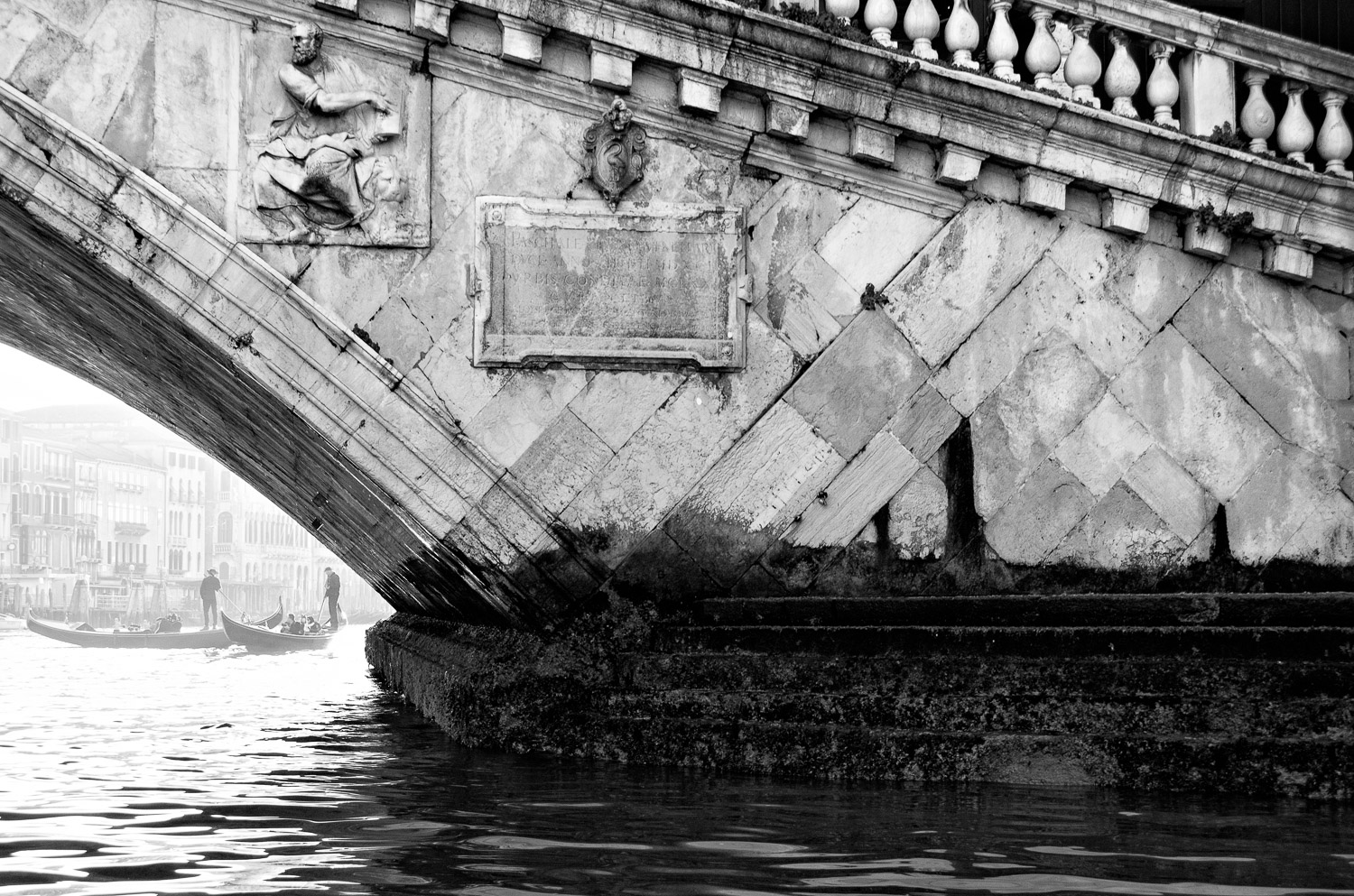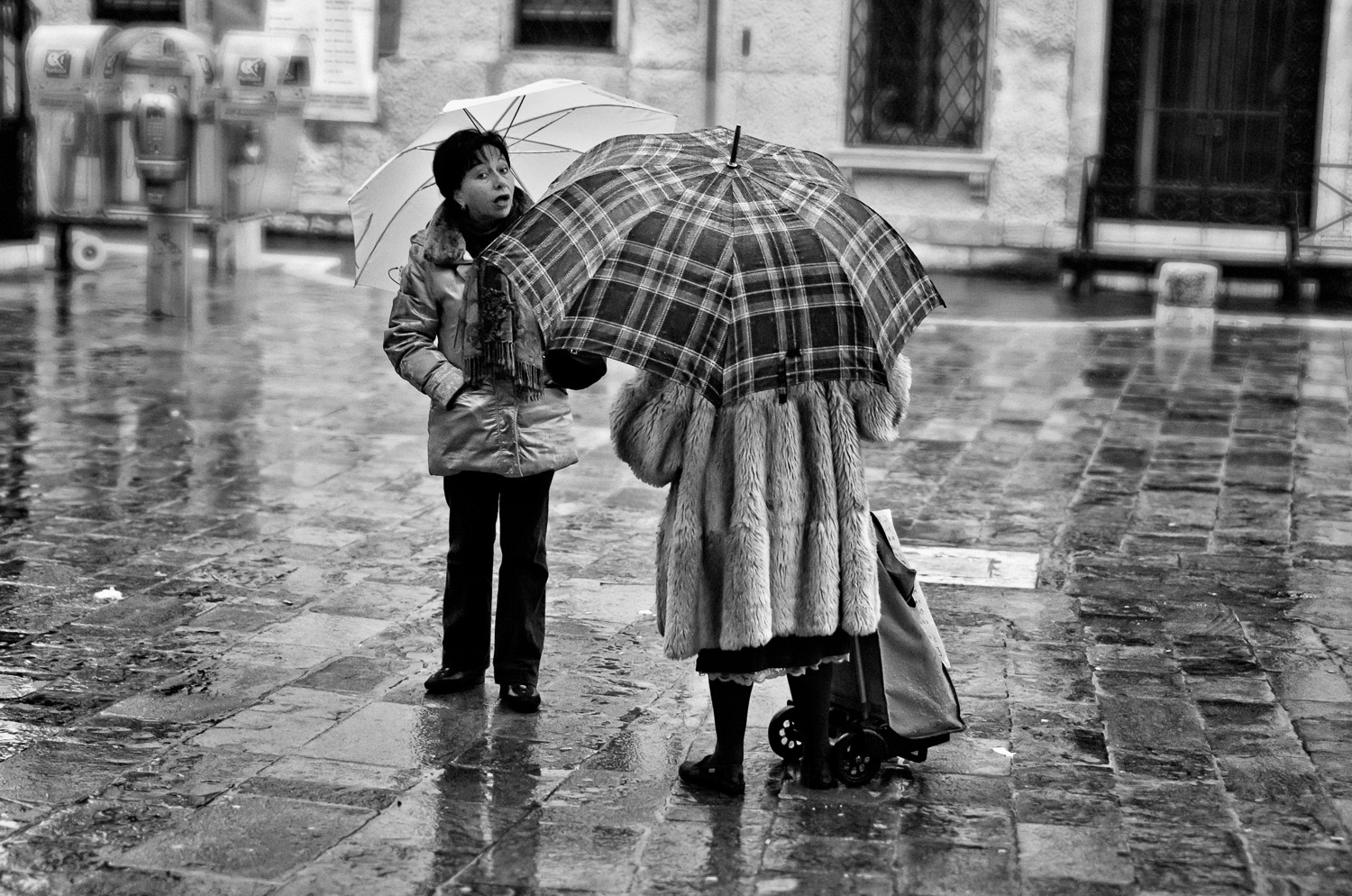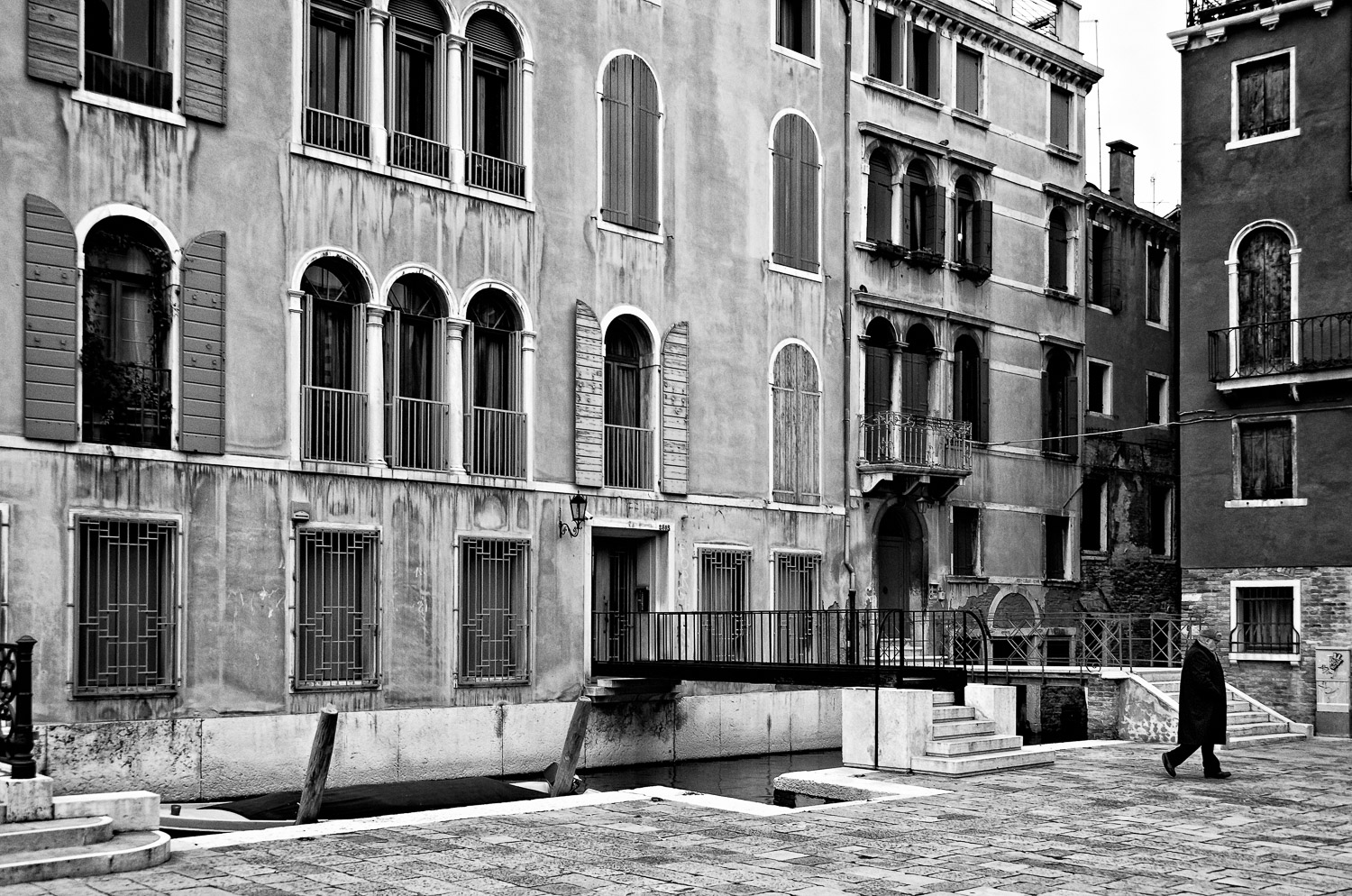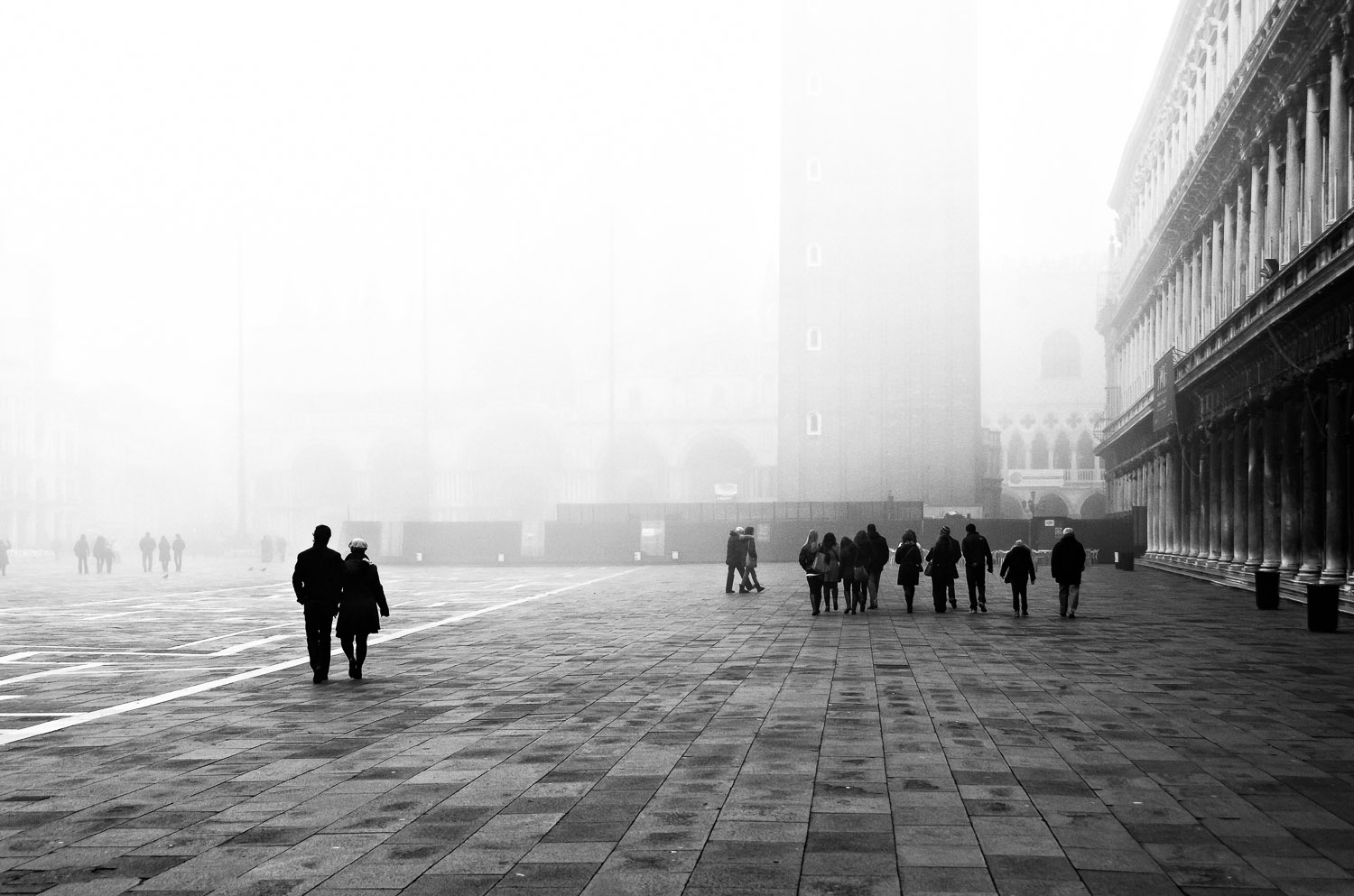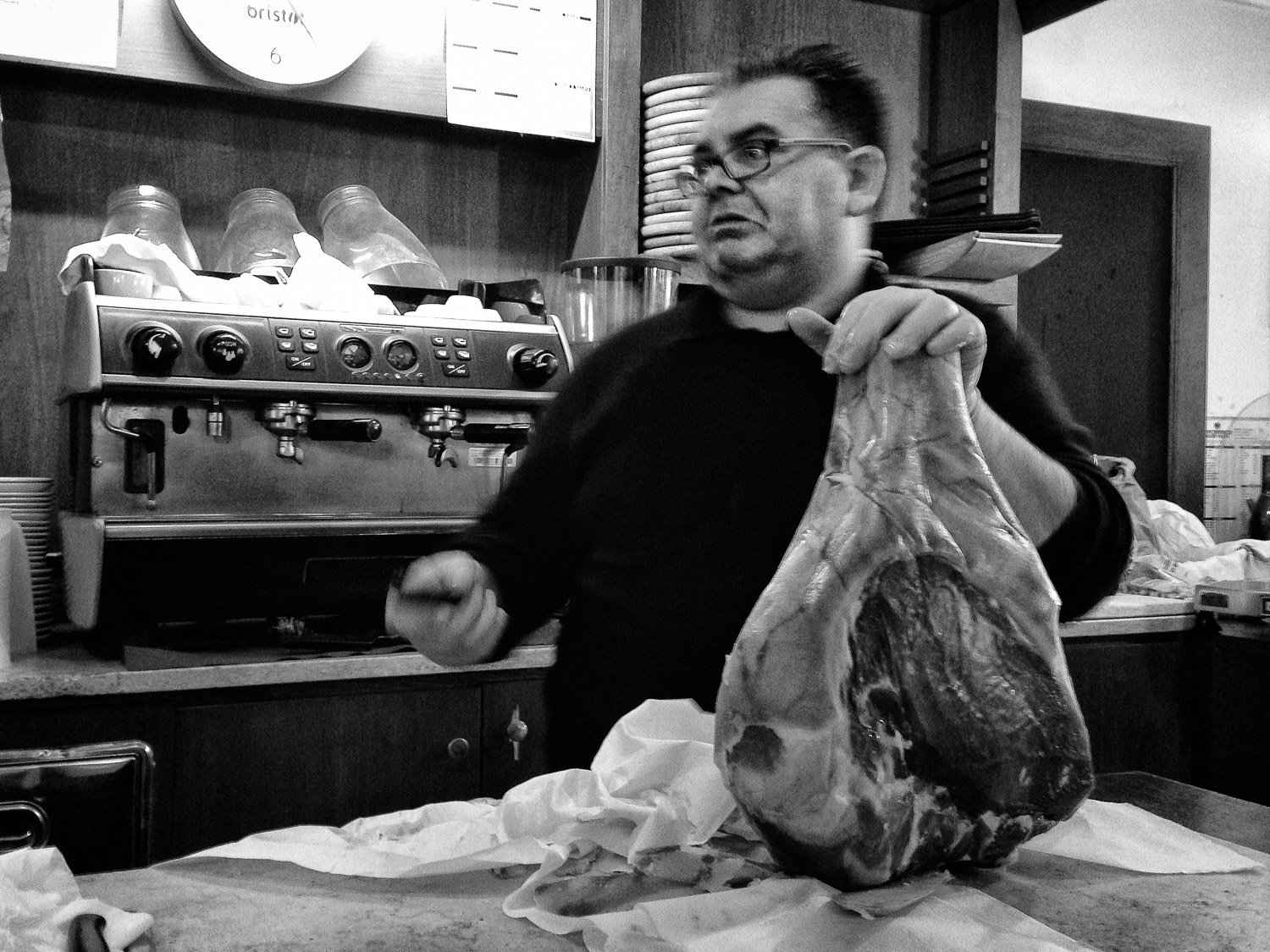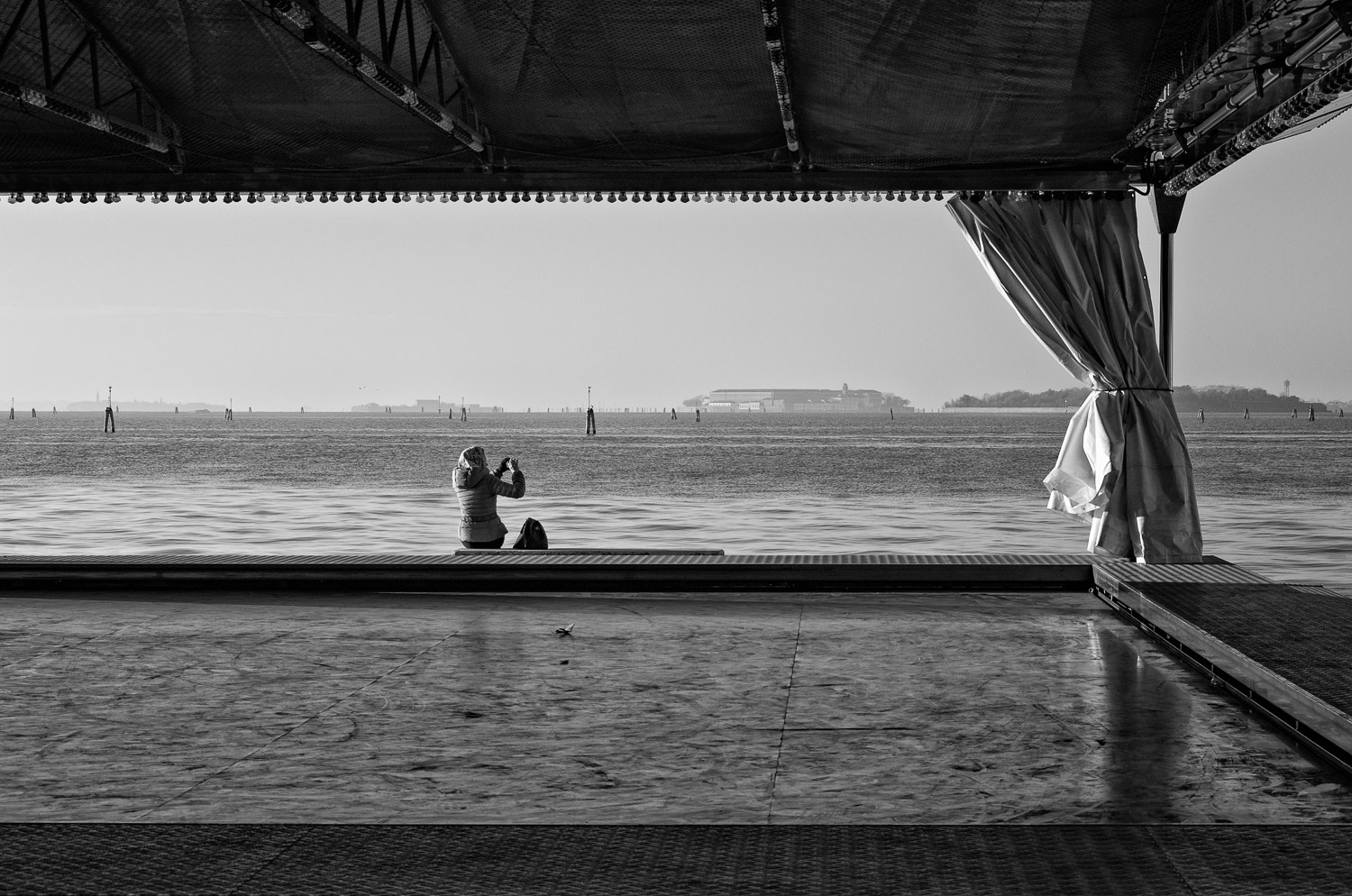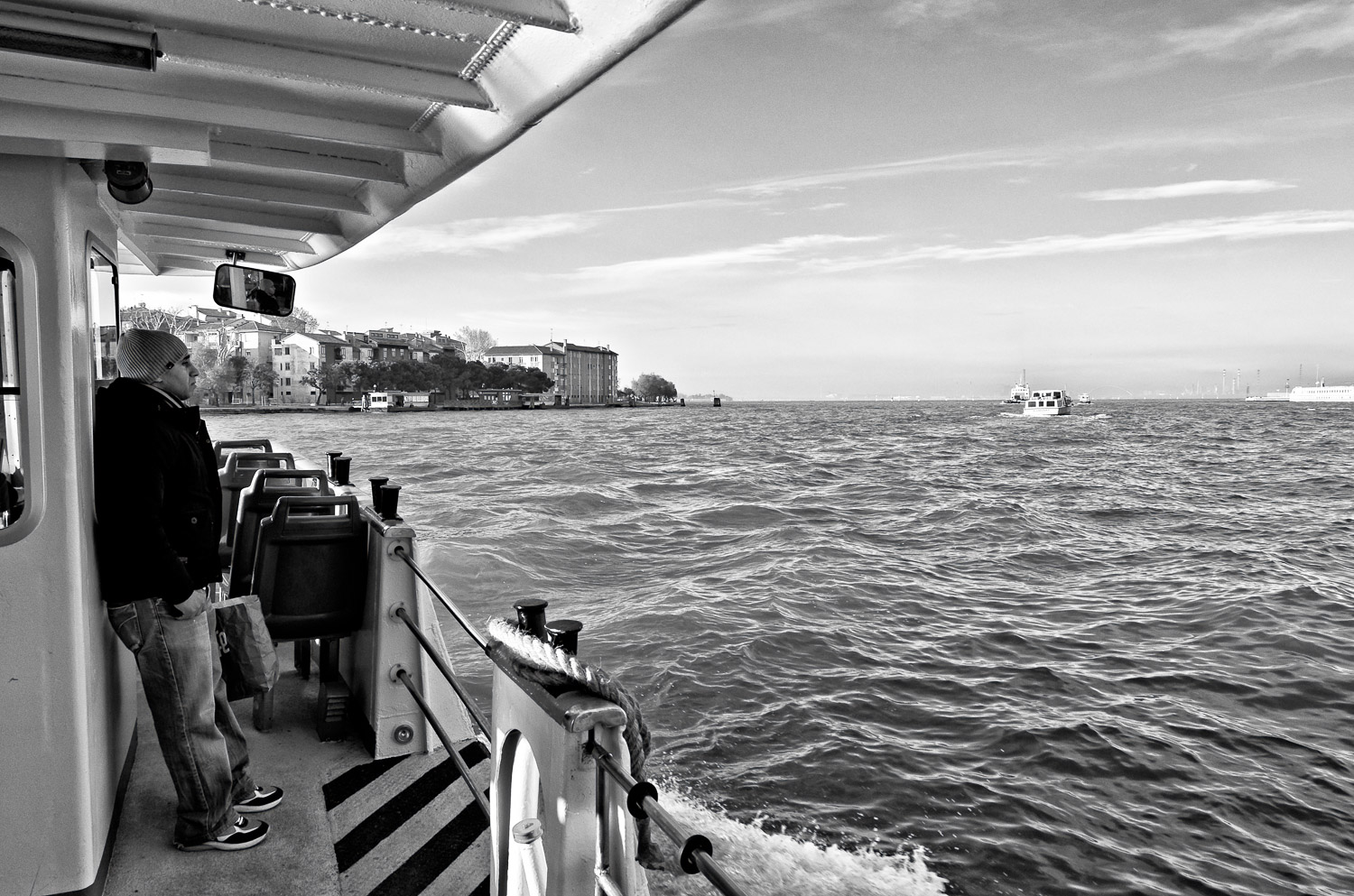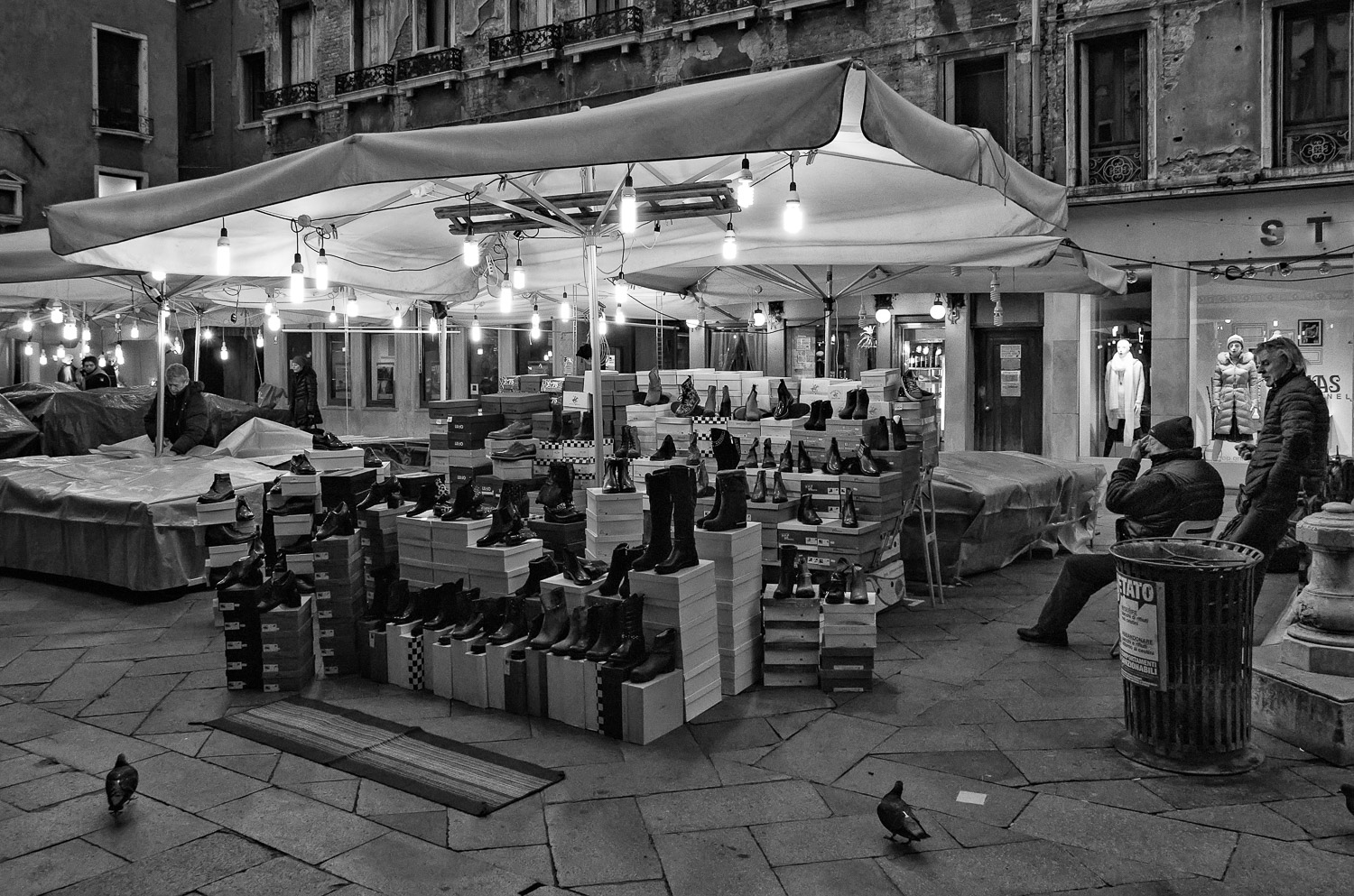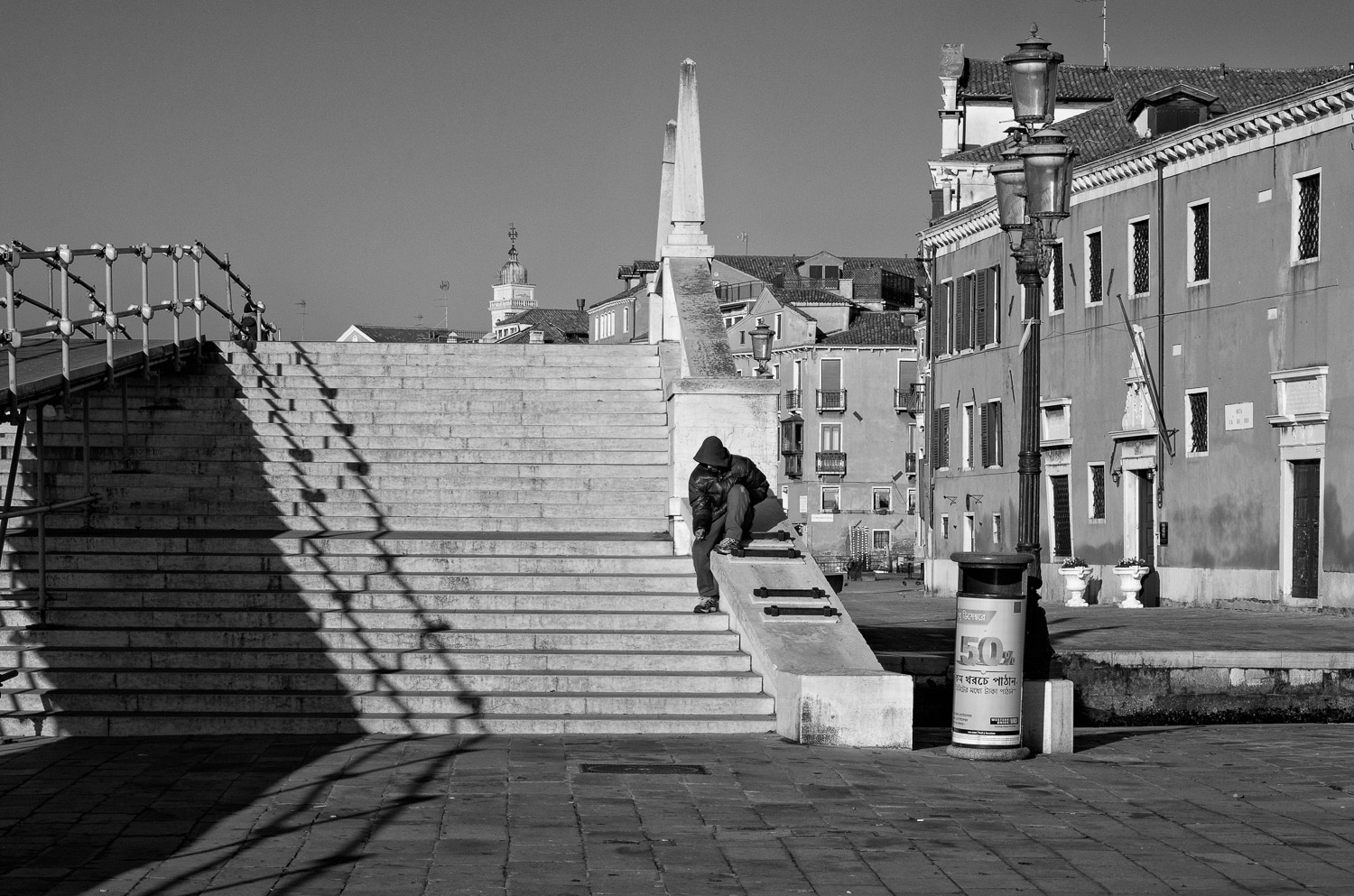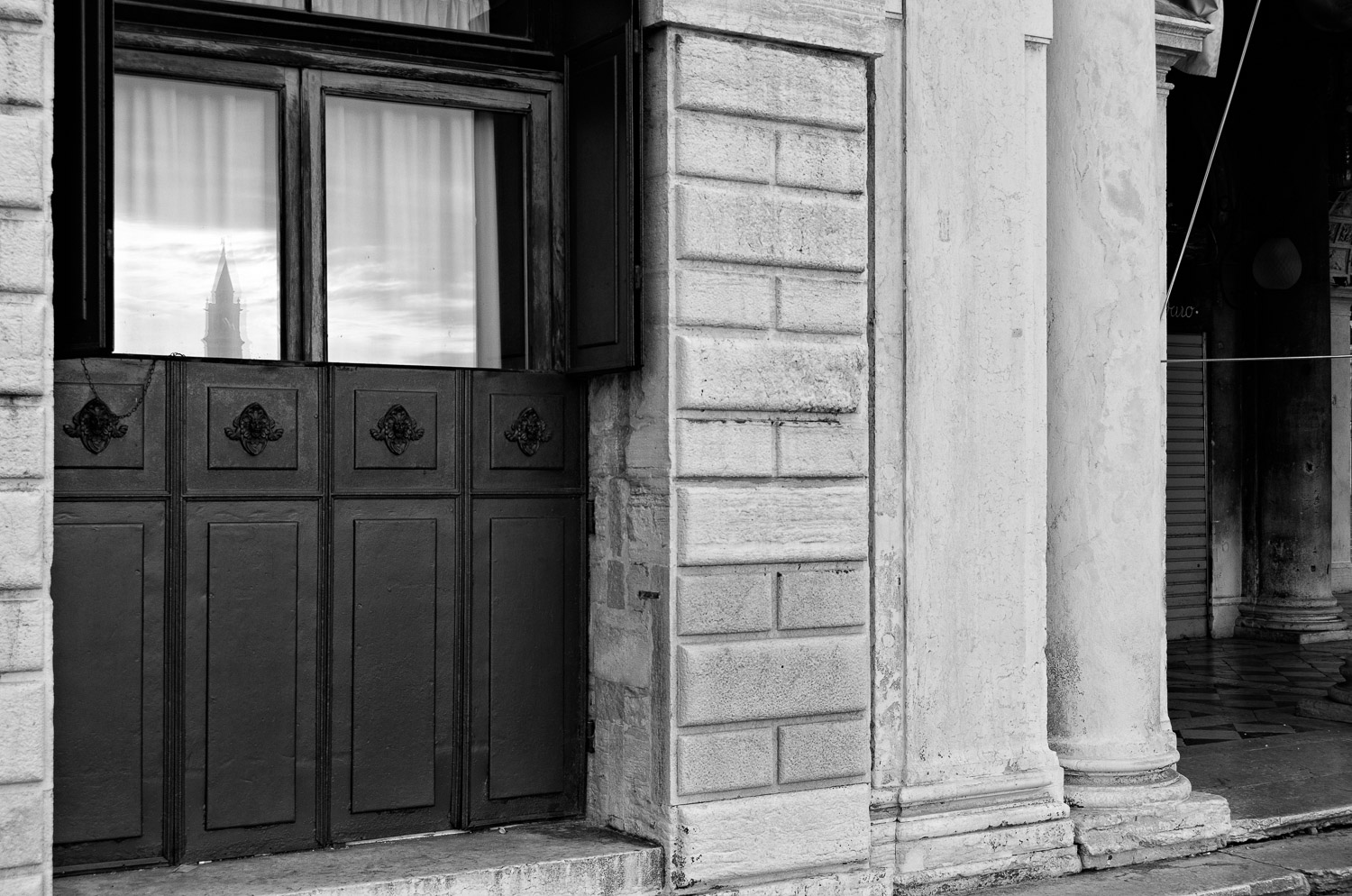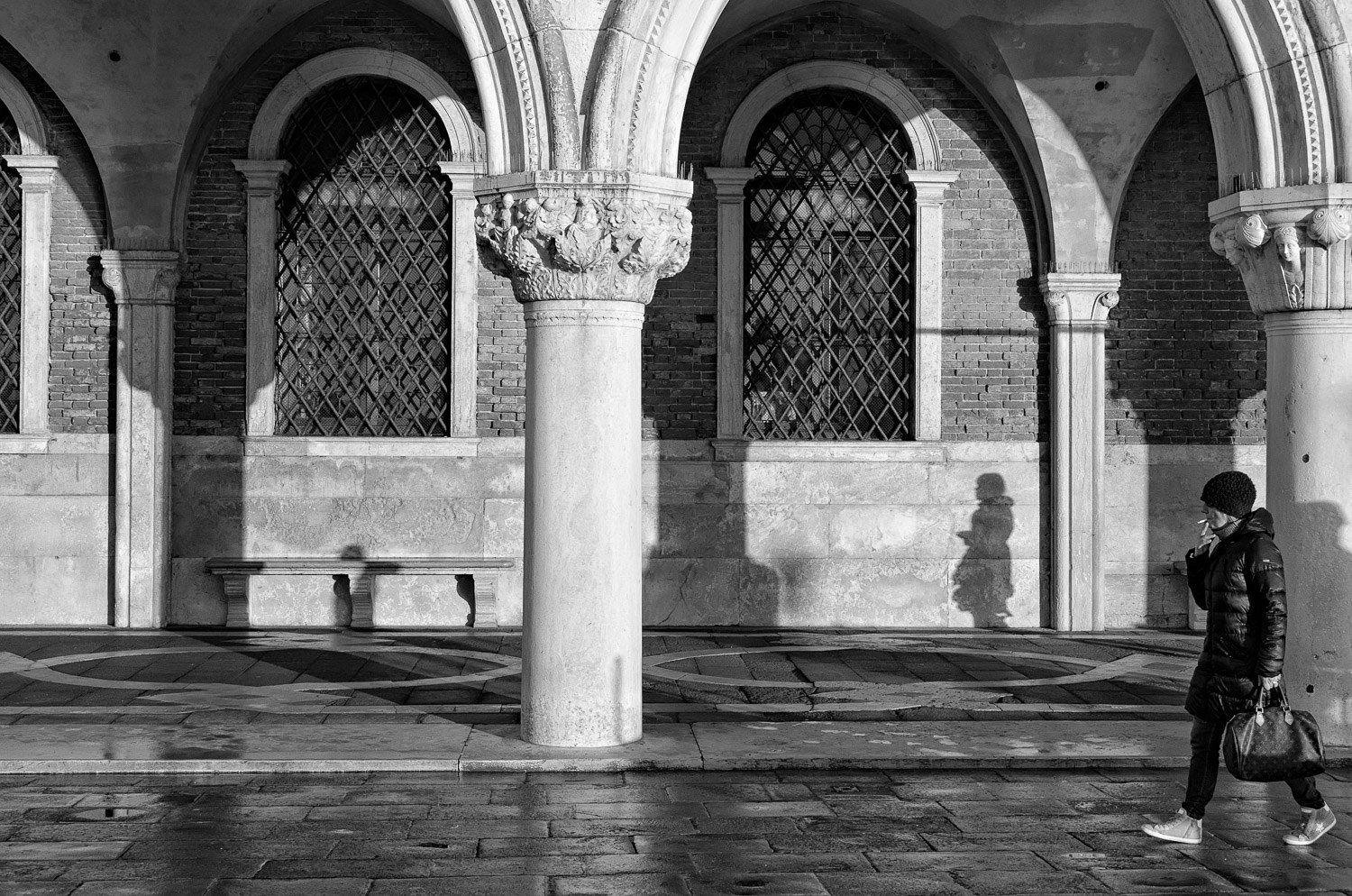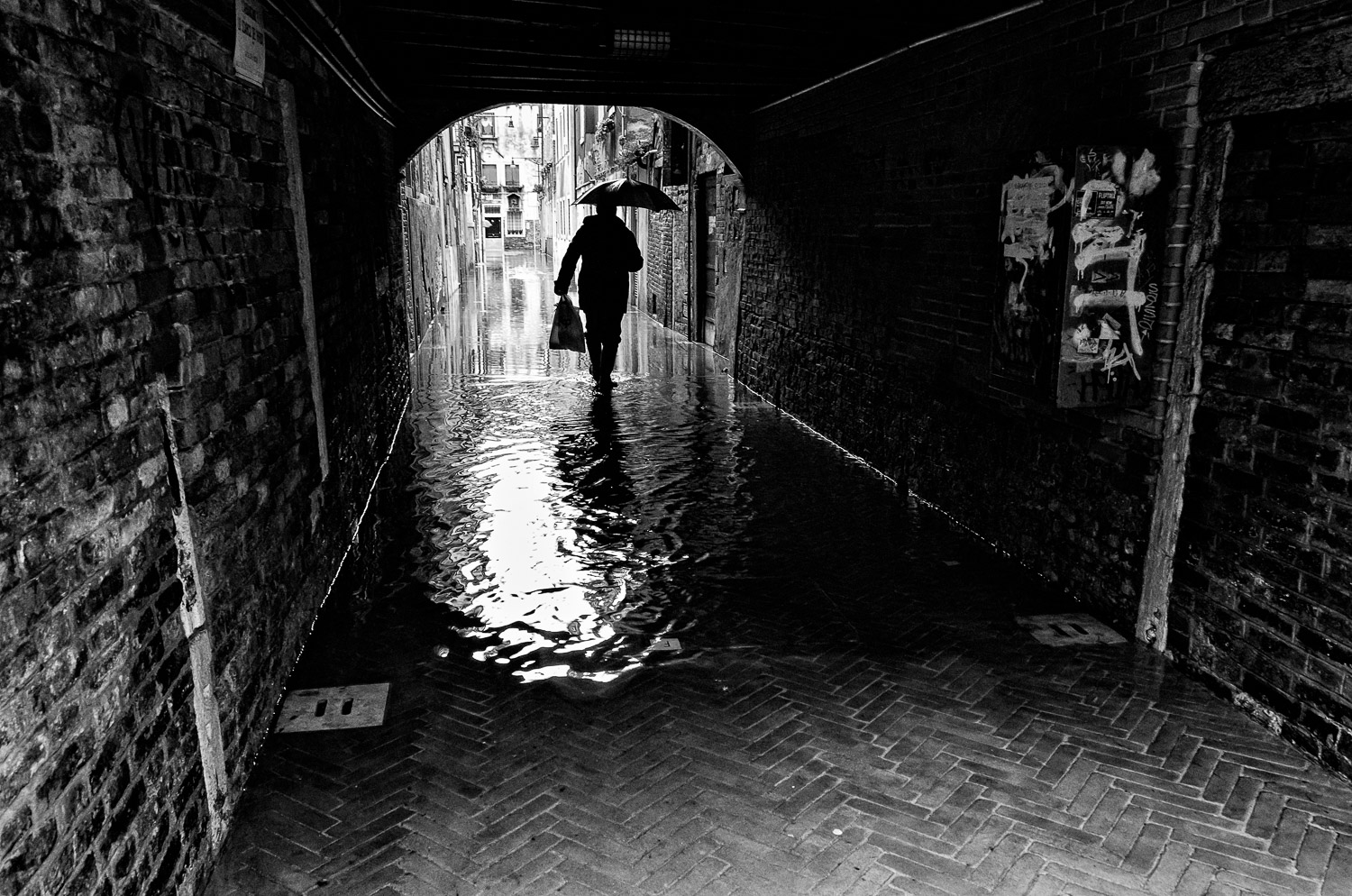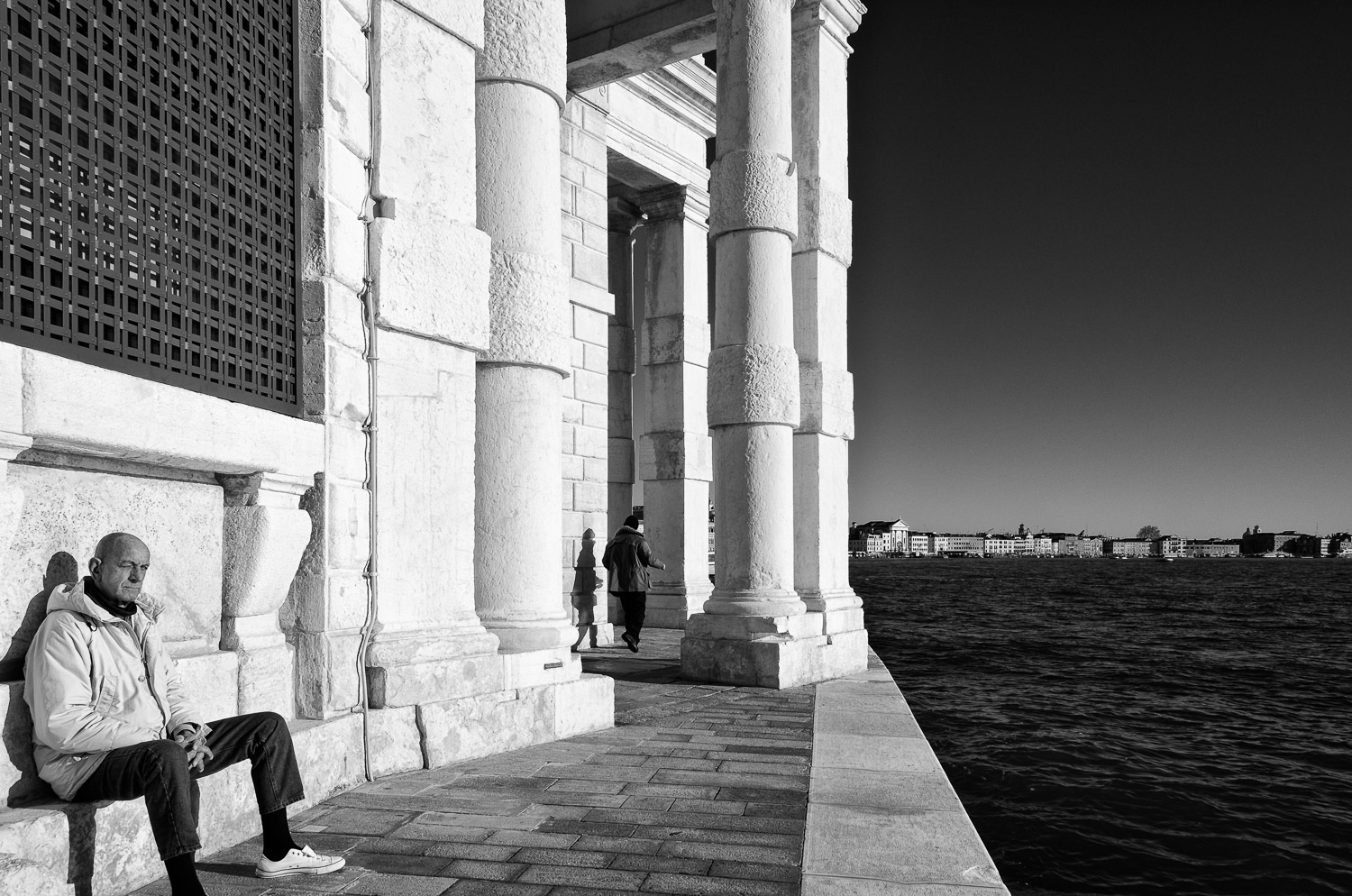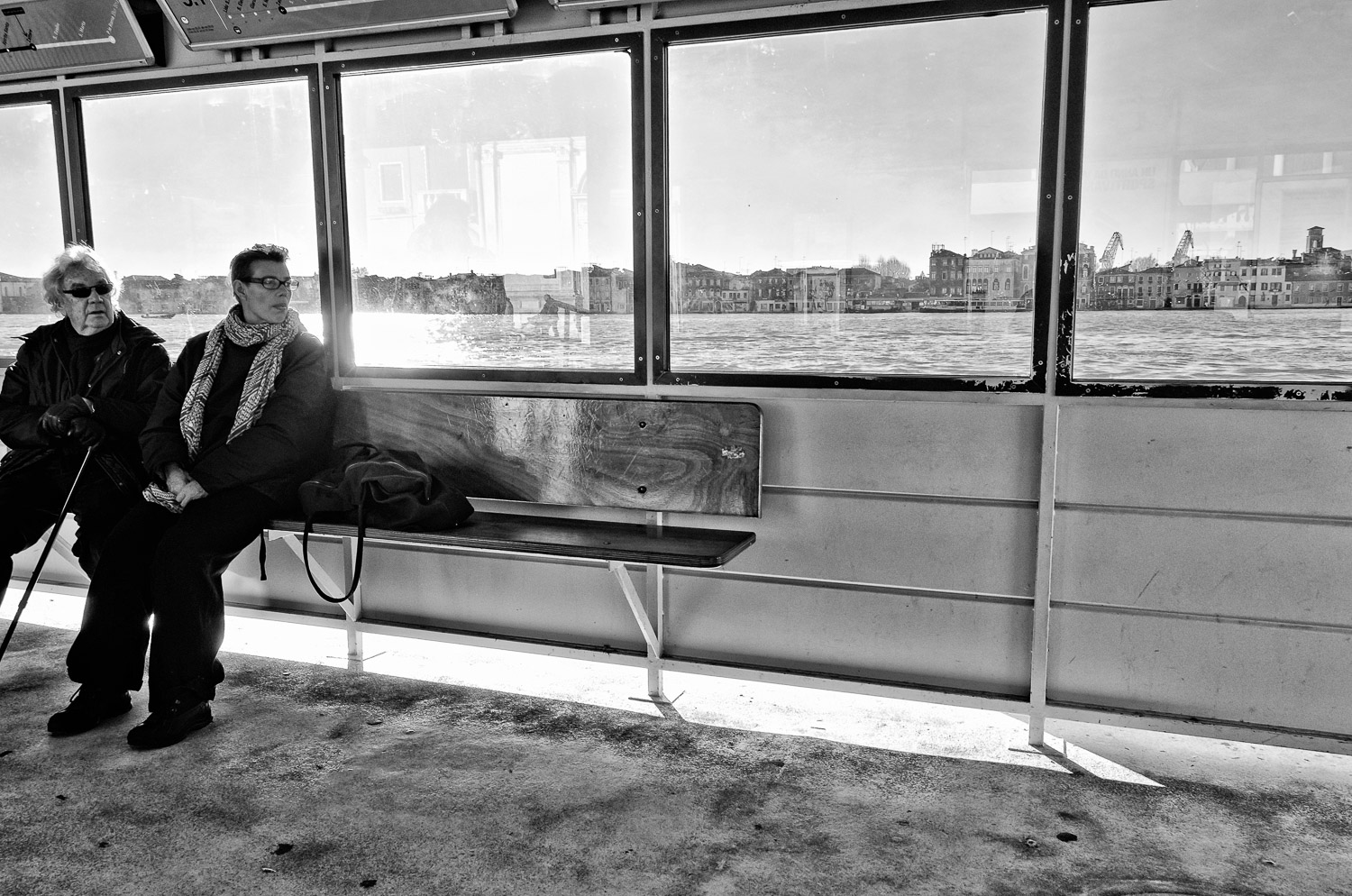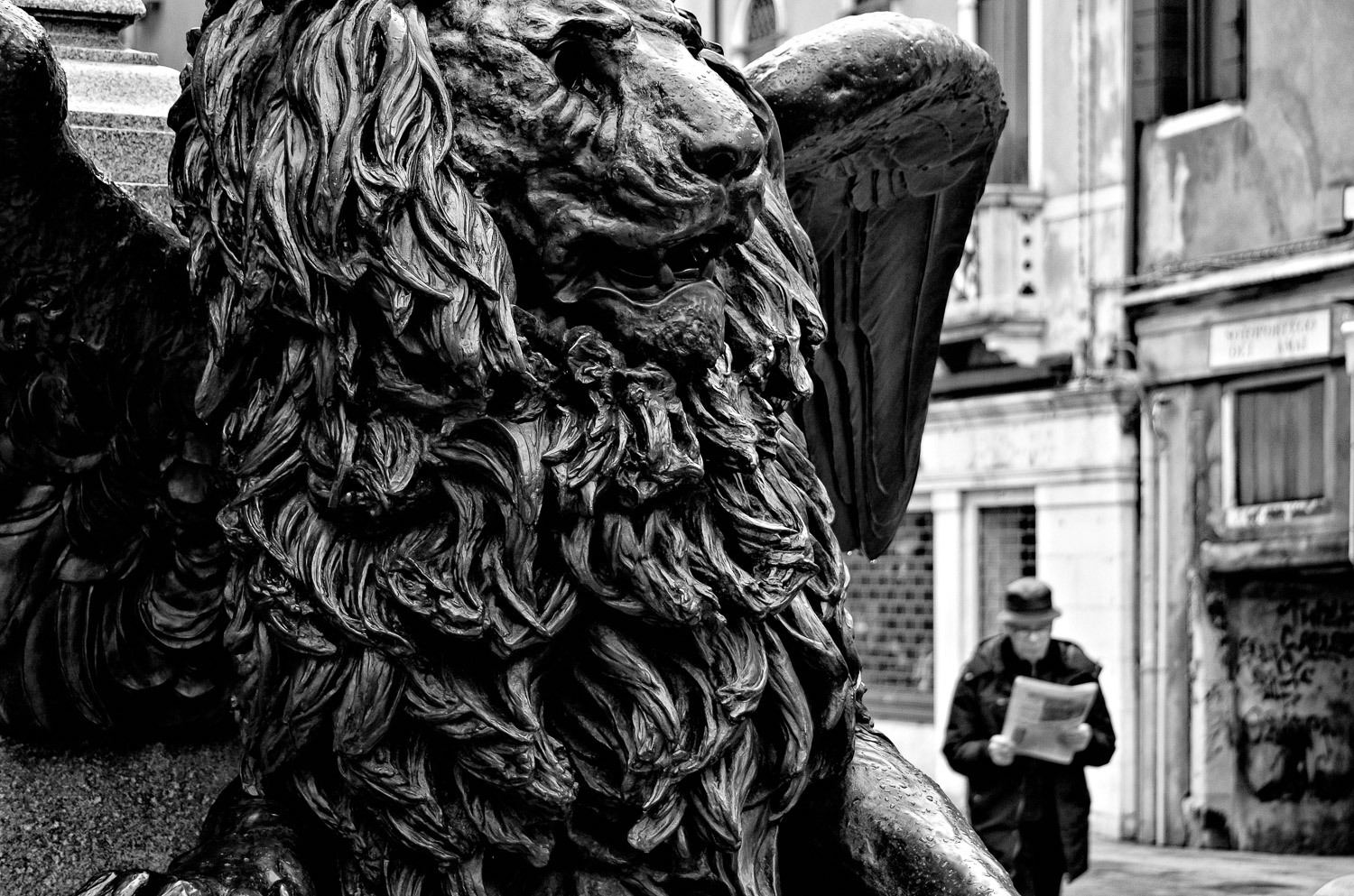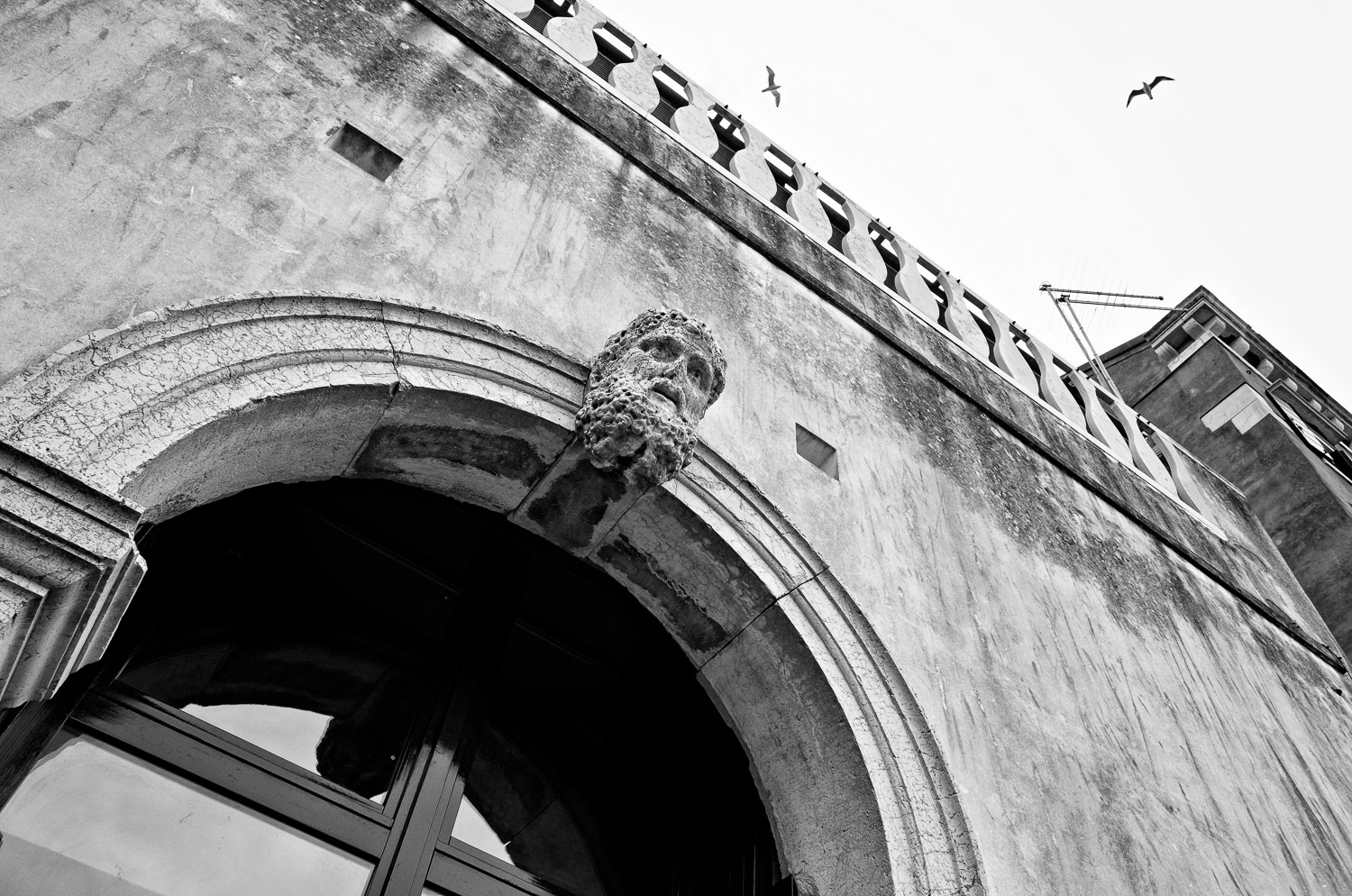
Mark Lindsay Art is a combination of art and education. Mark is an exhibiting artist and writer. So, you'll find his art here and also other kinds of information. Our site is a dynamic collection of galleries, and art blogs. Want to know more? Browse through our various sections. And come back often—our site is always changing.
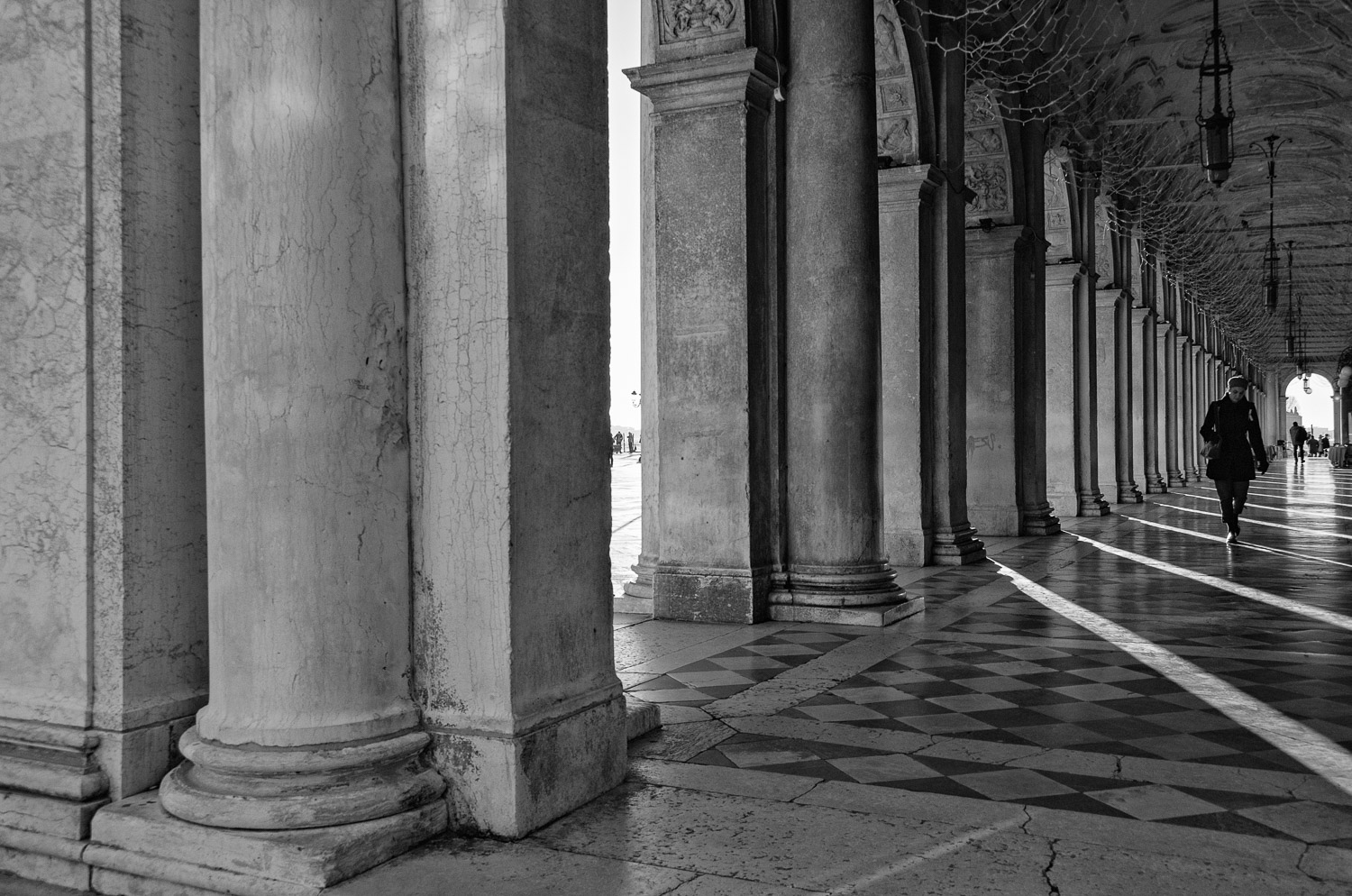
I used to hate zucchini. No, that’s not entirely true. I just didn’t care about them—at all. I viewed them as green, watery, tasteless, and not entirely attractive. And millions of them were always showing up in the summer as well-meaning gardeners unloaded their surplus on their friends. Just what was one to do with all that zucchini?
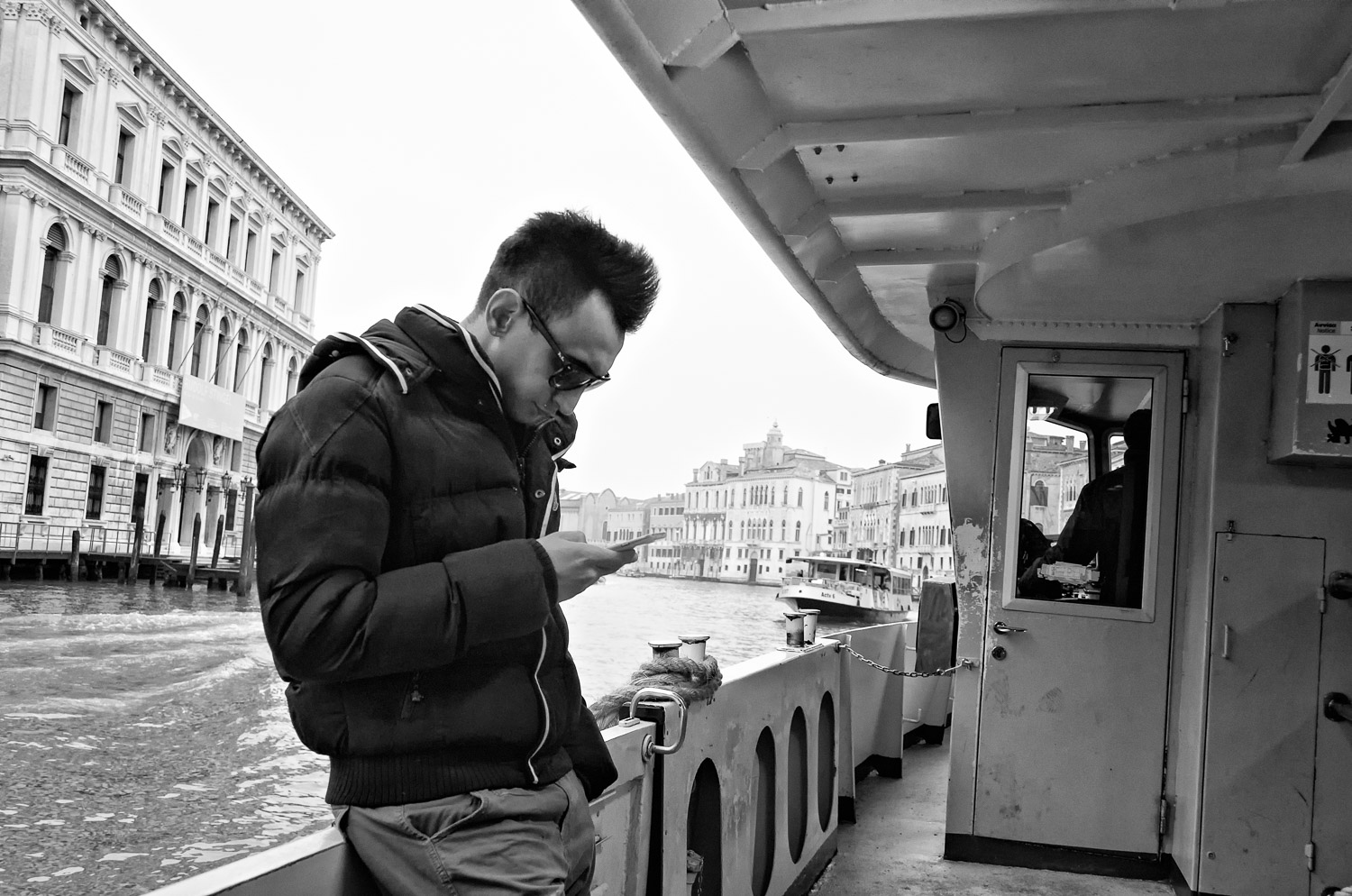
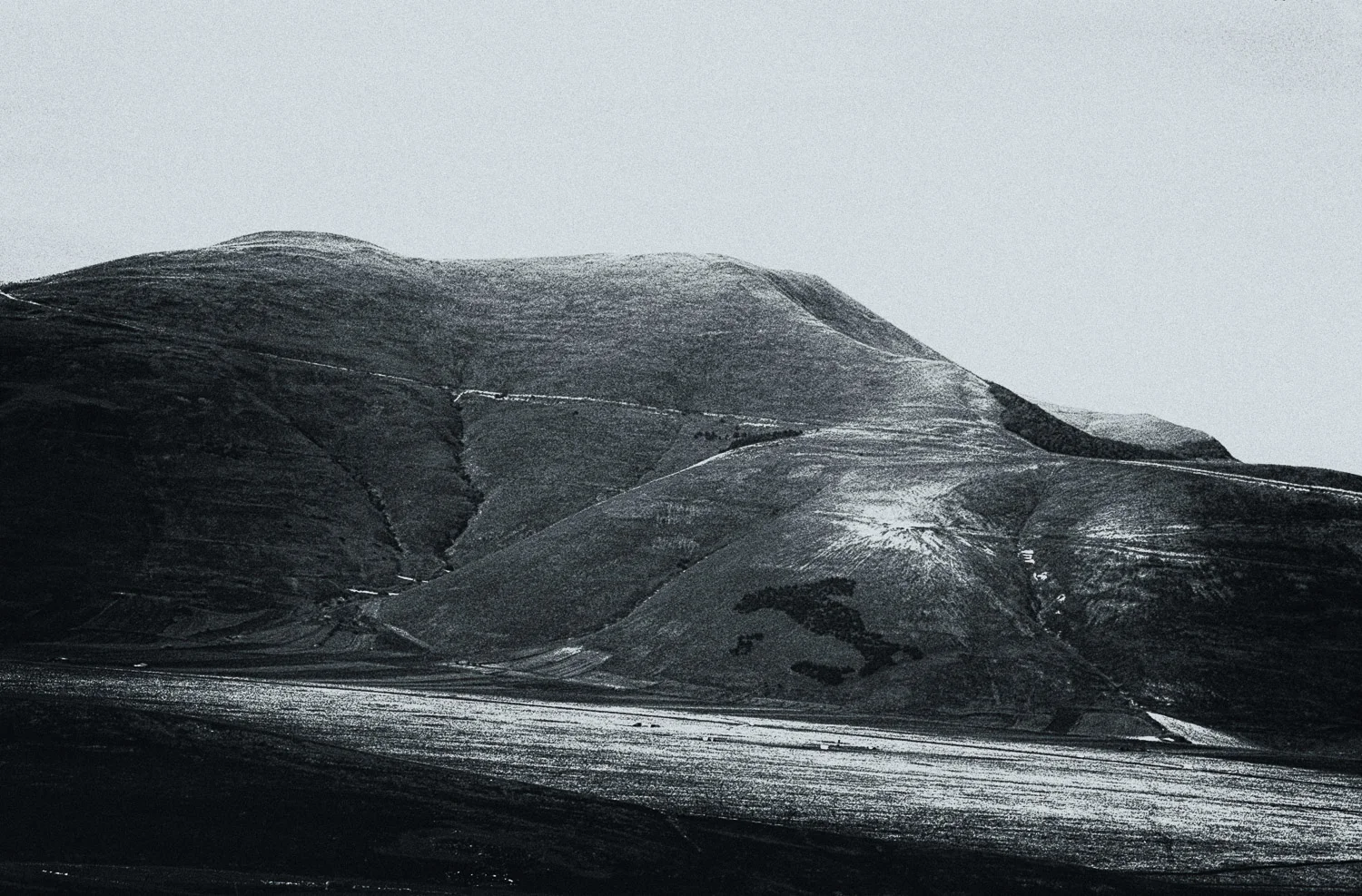
It was like an apparition. A road wound up a steep hill to its pinnacle. The cumulus clouds had parted so that only the summit was sunlit. It was there that we saw the medieval town of Castellucio. The ghostly structures were impressive, yet forbidding. When we reached the town there were no people, only a cutting wind that swirled scraps of litter around in a circle. A wild dog sniffed the street.
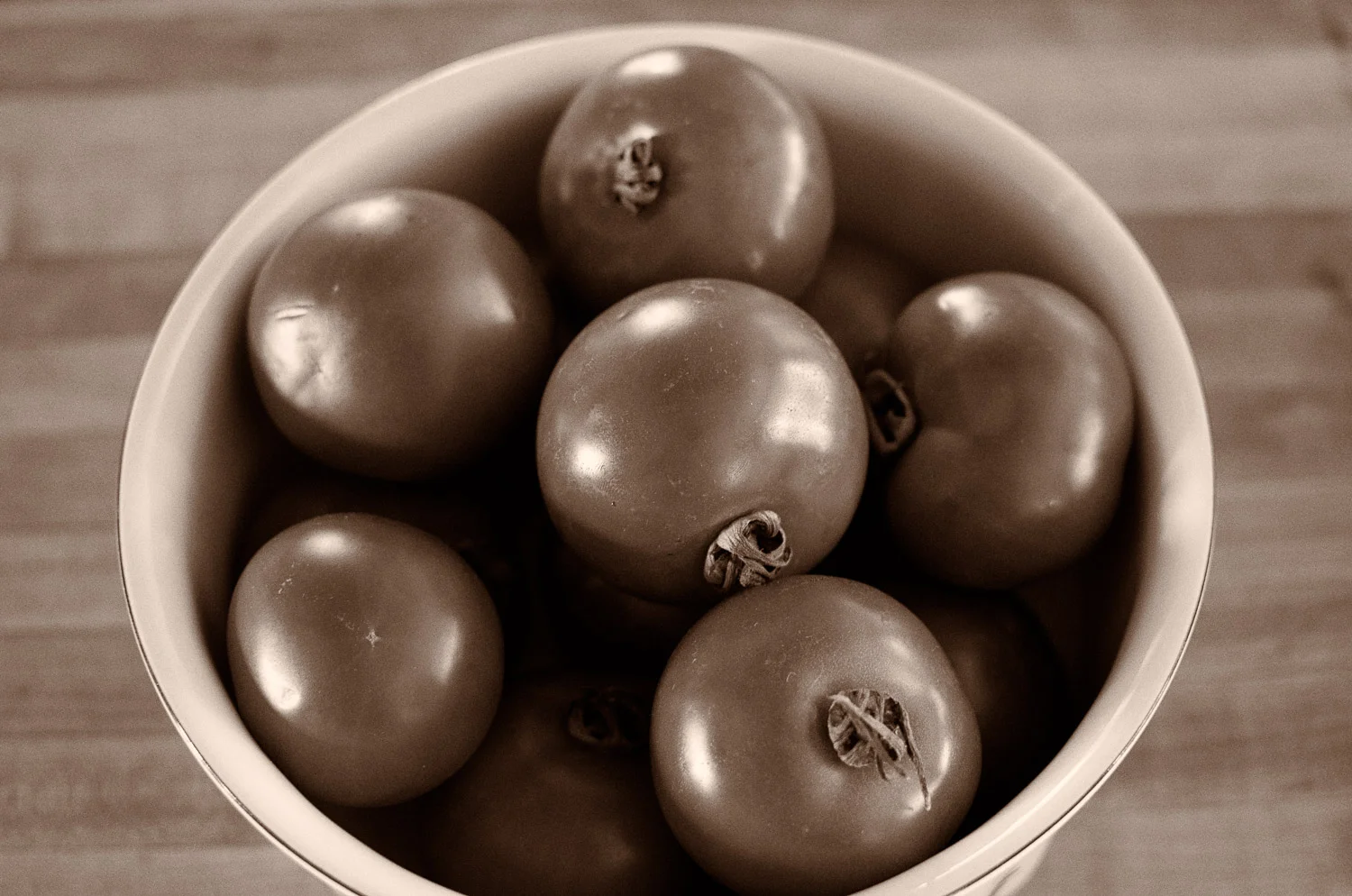
I was born in New Jersey. Usually I’m proud of this fact. I’m especially patriotic about my roots when it comes to tomatoes. It has been my opinion that New Jersey is the world’s capital of the tomato.
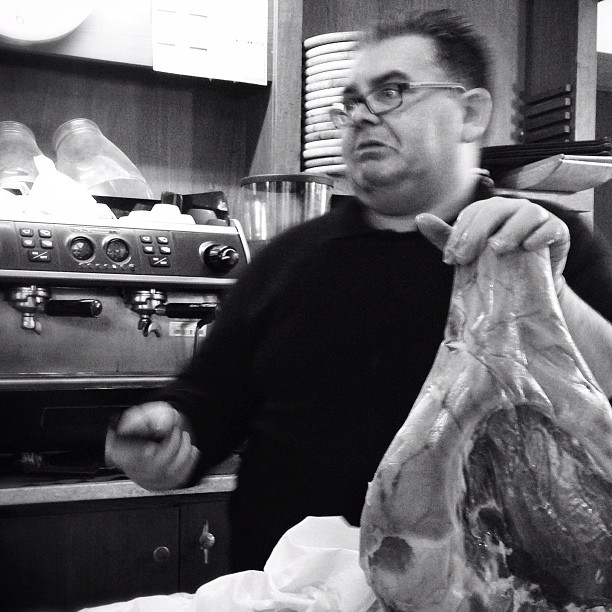
A round man sat down at the table adjacent to us. His elastic-waist pants gripped the full circumference of his belly, making his rotundity all the more prominent. Like the dome of the Pantheon, his girth appeared to be geometrically equal to his height.
Margherita handed me her longest matterello. Shaped like a dowel, it was three feet long and two inches thick. It was made of oak, smooth, very old, and of a deep rich color and patina. One end was shaped like a small doorknob while the other had a gentle taper resulting in a blunt point. I held it with caution. It looked more like a weapon than a kitchen tool.
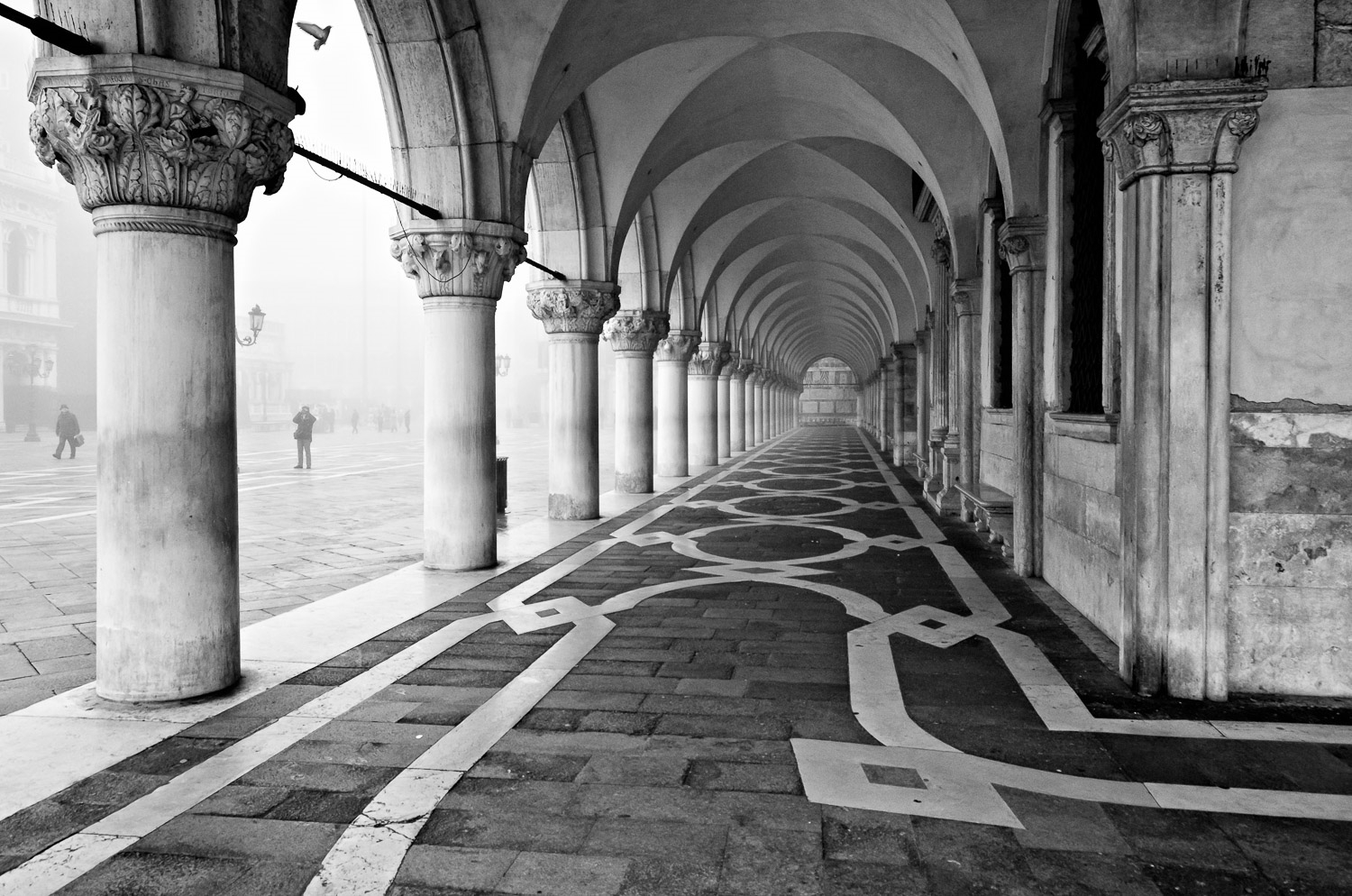
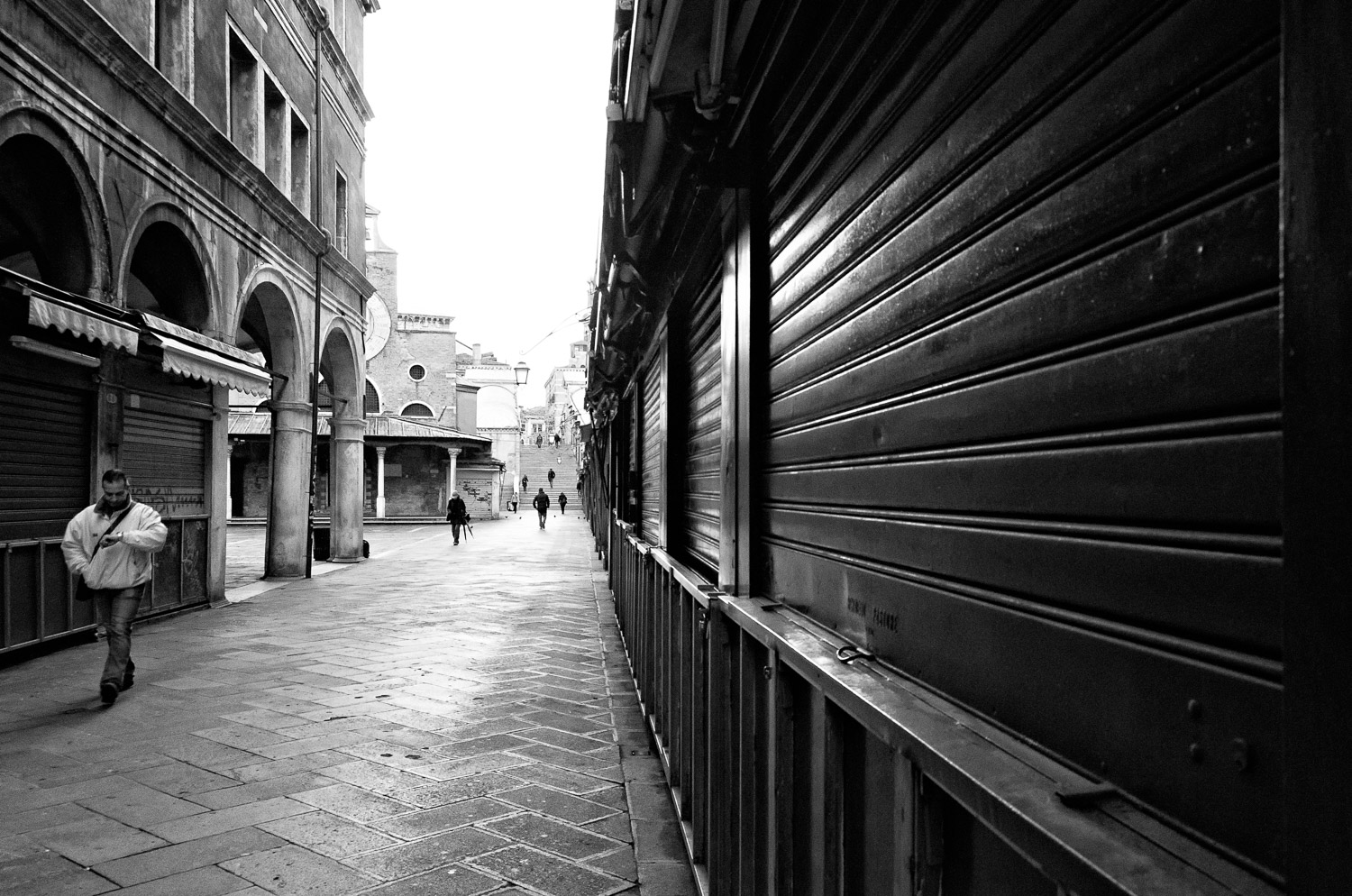
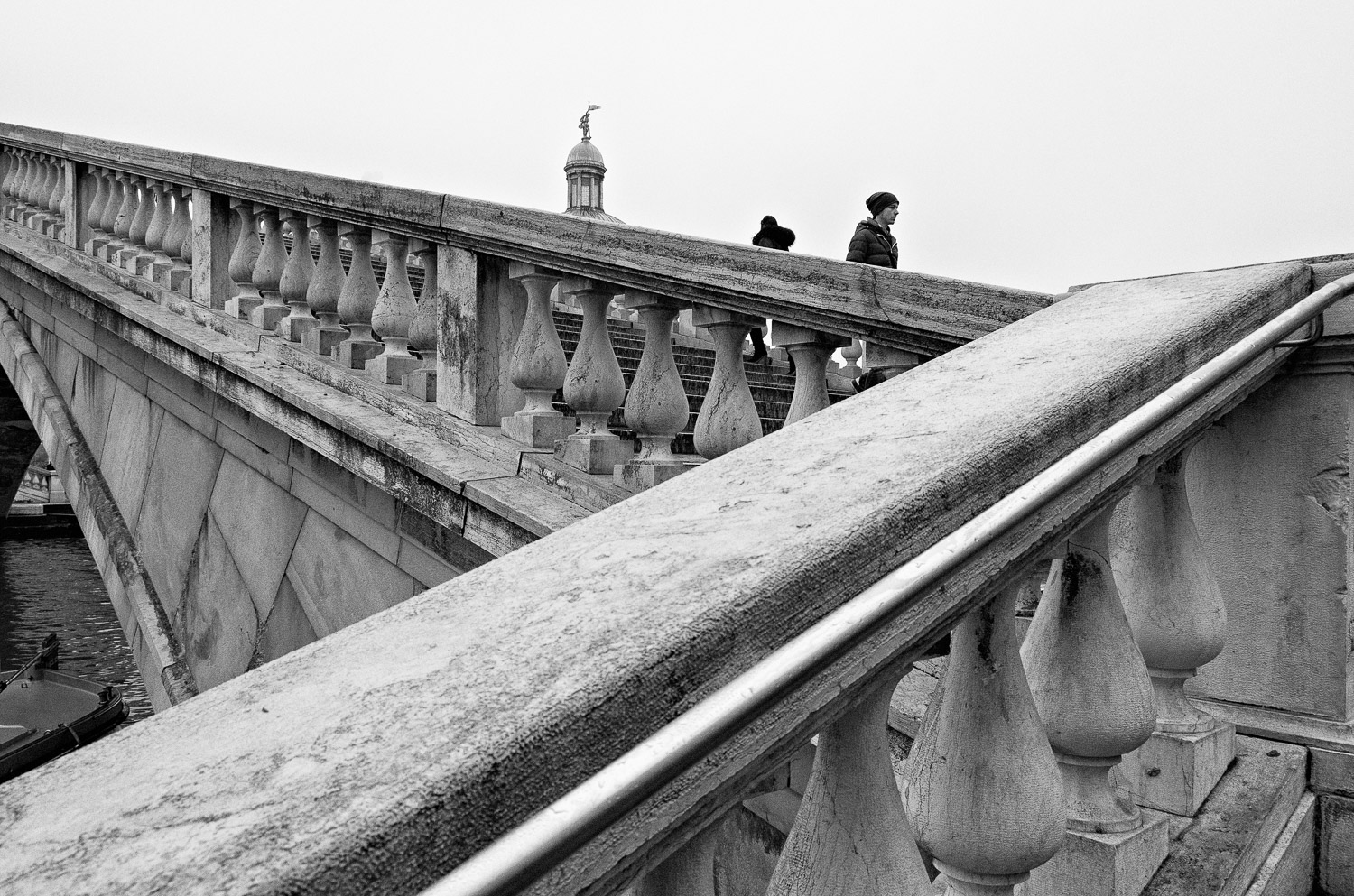
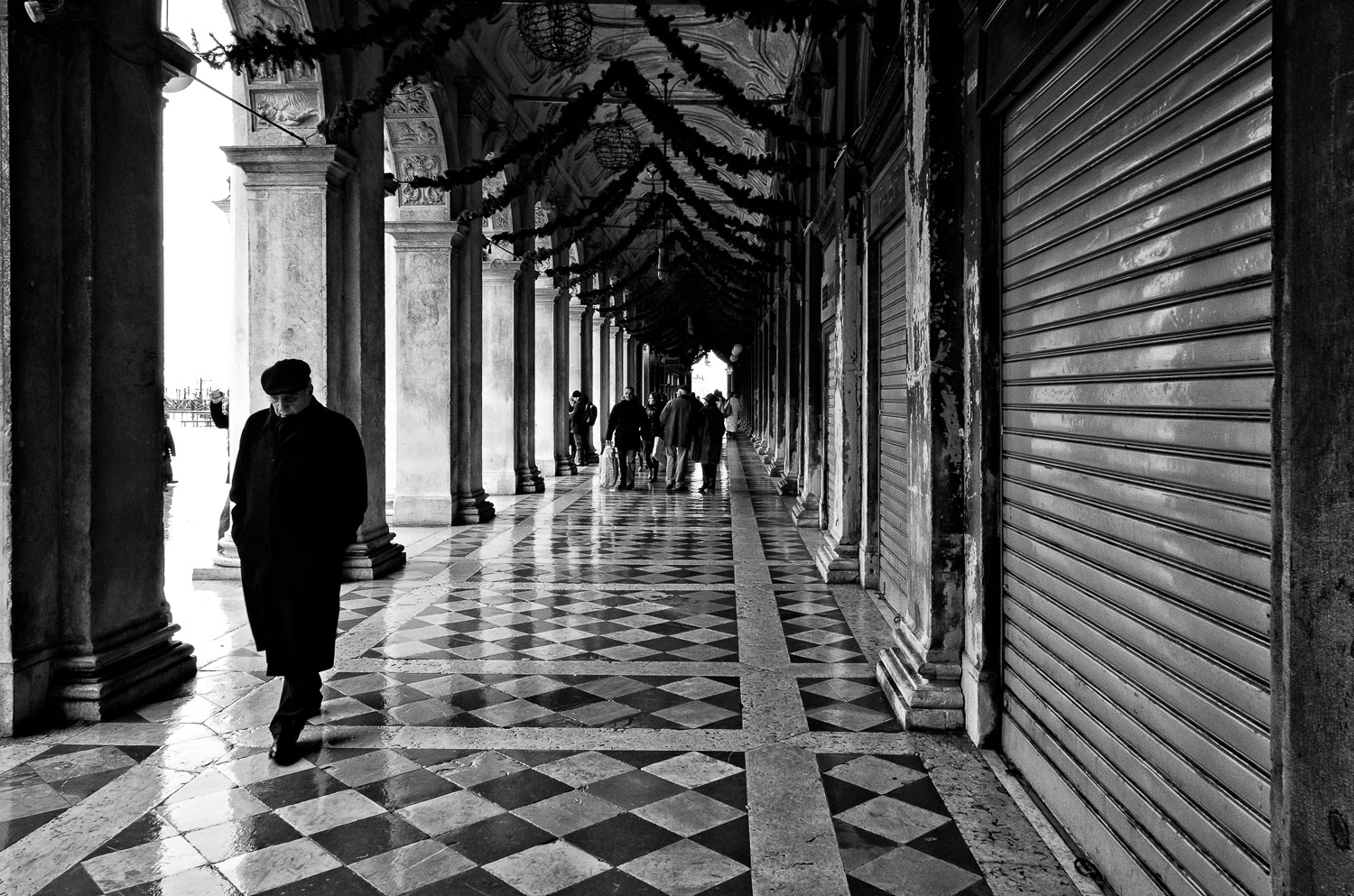
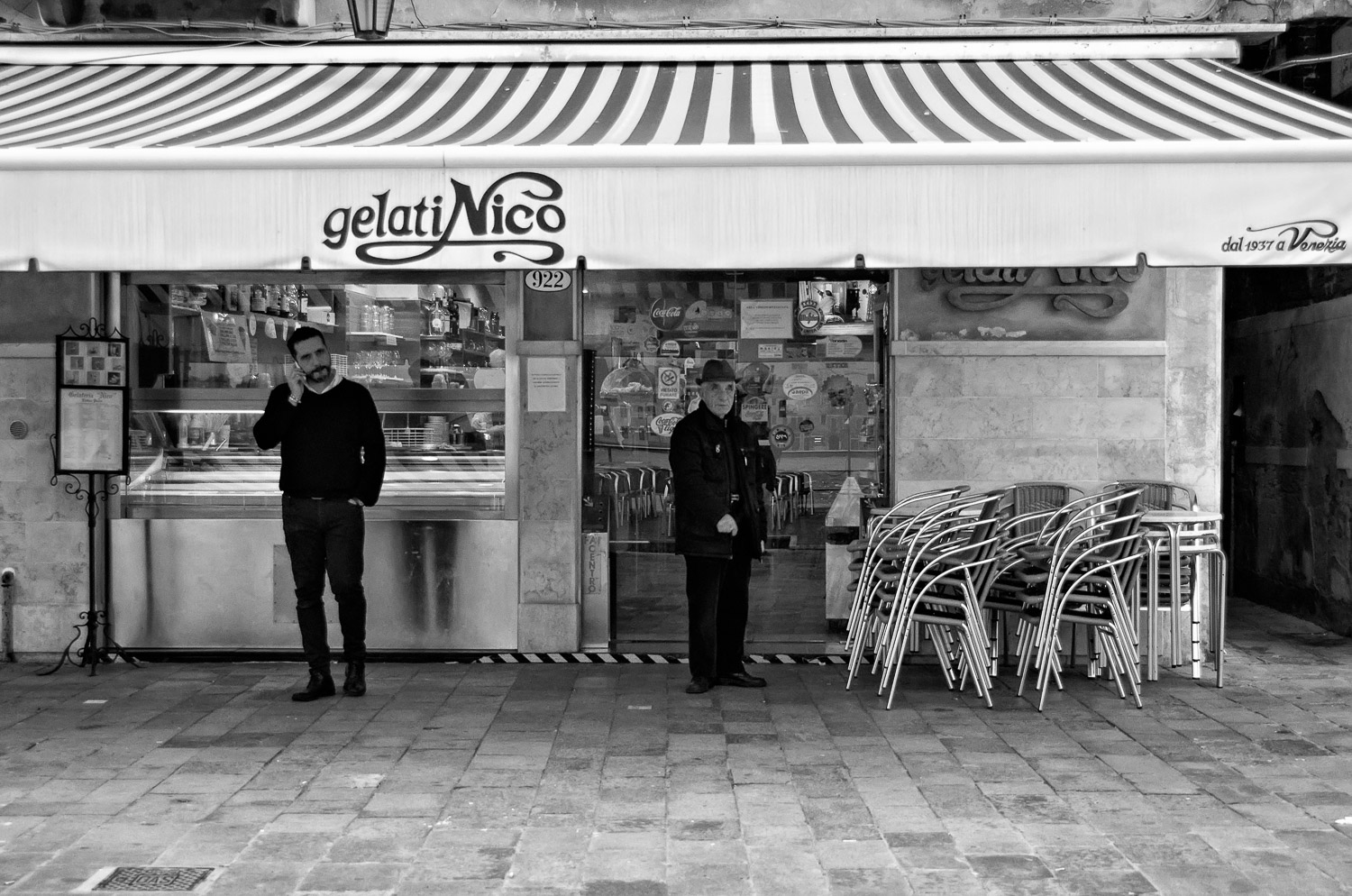
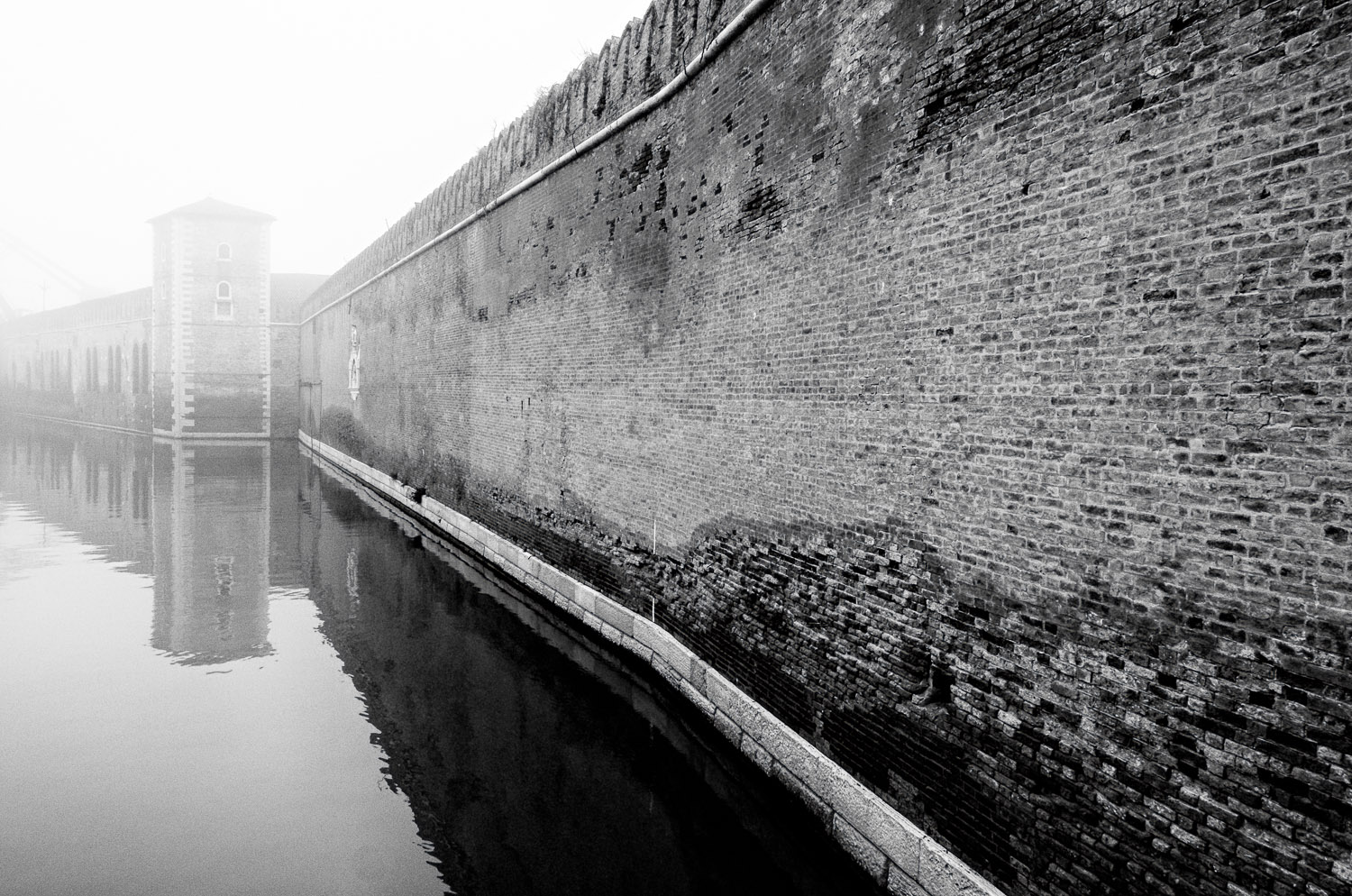
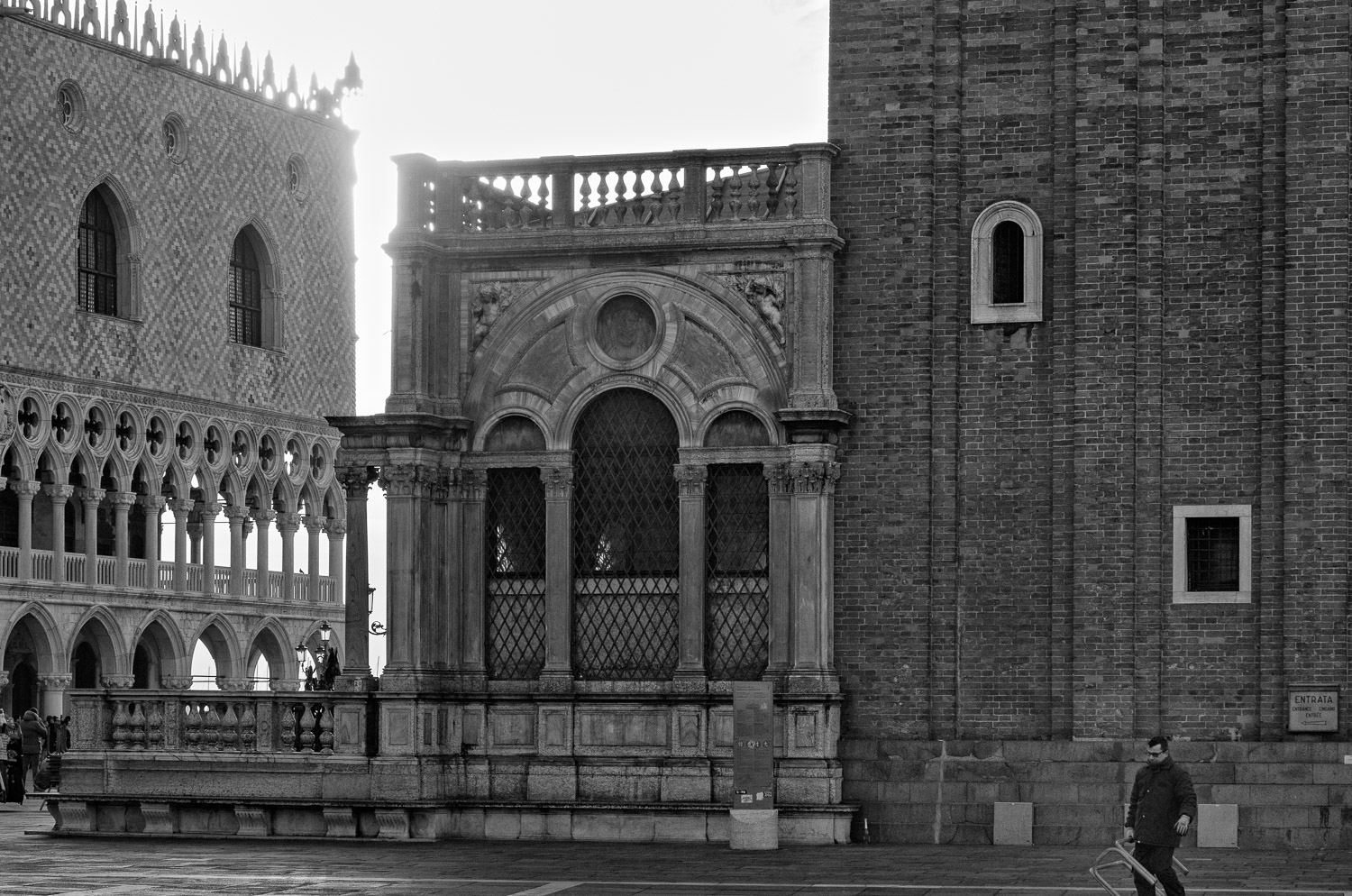
It could not have been colder. Perhaps if one were to compare temperatures between here and elsewhere a clinical case could be made. But the fog of the Veneto had proven its reputation. This was more than frosty, it was a bone-chilling, joint-aching, shivering cold. It was a damp cold that went as deep as one could feel. I was miserable
The first afternoon and early evening on the South Rim was tempestuous. The Arizona skies were heavy and swirling. This is never a good sign in the monsoon season of early September, especially for a hiker about to descend into the enormous gash that is Grand Canyon. When stimulated, monsoon season means a heavy diet of rain, wind, thunder, and lightning. It means clear skies that turn to into an apocalyptic fury that can curdle the blood of the most fearless of campers. One look at the sky upon our arrival and I knew it was going to be an interesting week.
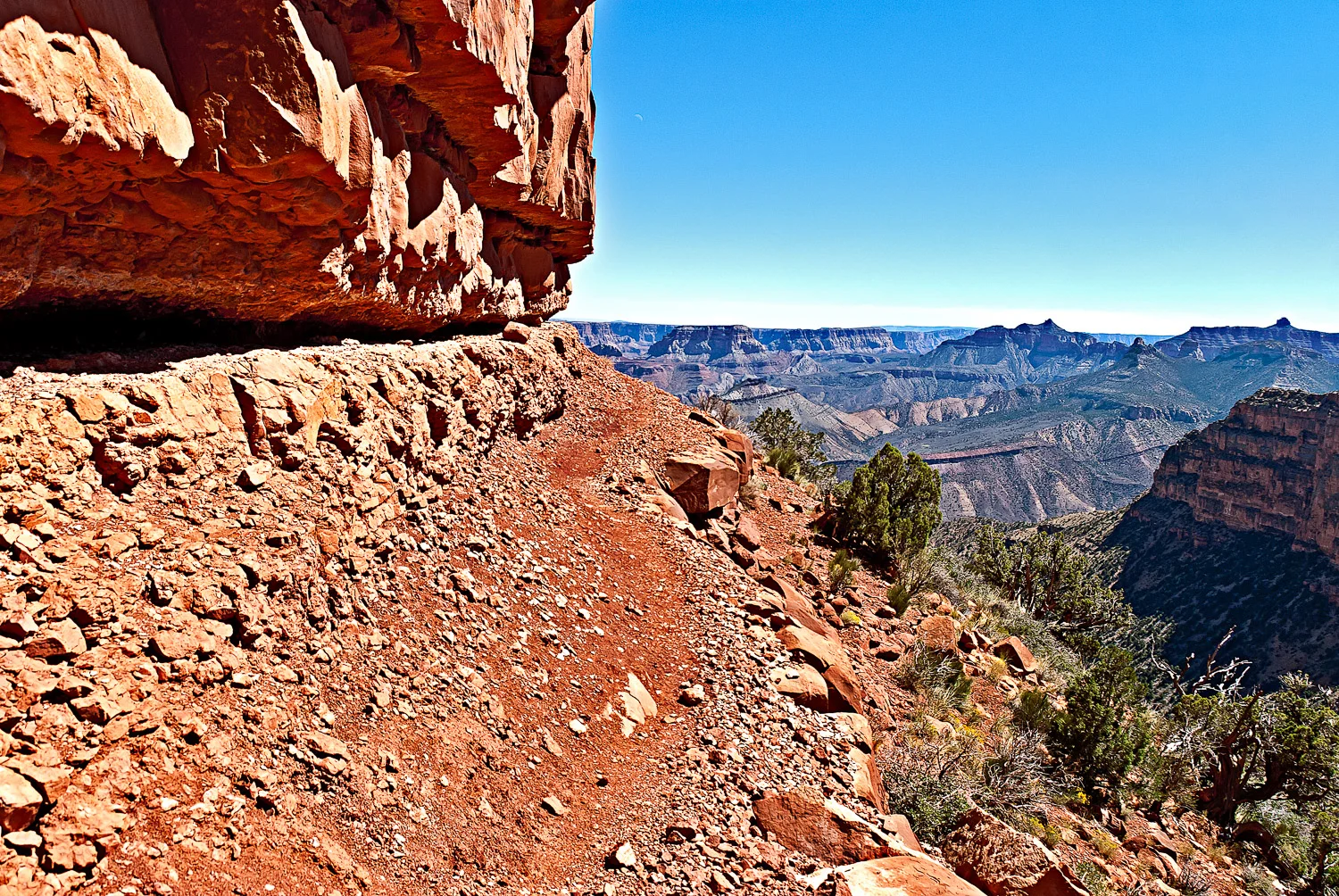
The balmy air at the North Rim was speaking to me. I should have been listening. Late September in these rarefied parts is normally brisk, sometimes even cold. On this day of our arrival we were comfortable in short sleeves. If it were warm here, the inner furnace of the canyon would be even hotter than normal. But the Nankoweap Trail was already playing with my head. I'd heard and read so much about its steepness, ruggedness, and dizzying heights I didn't even bother to think of its exposure to heat and sun. But in the end it's the heat that always matters in Grand Canyon. Always.
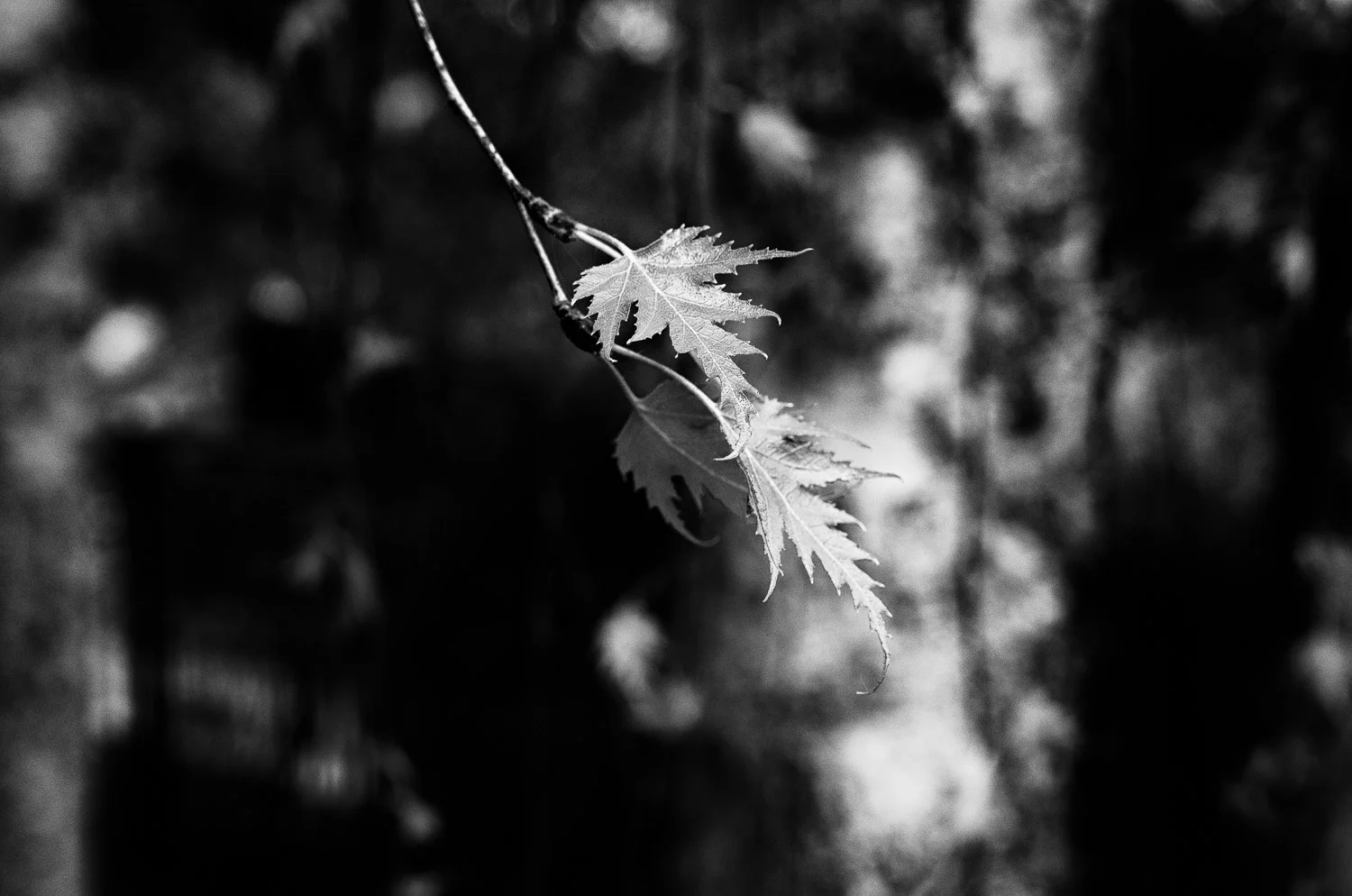
Vicky’s Birches have new leaves. Just how did that happen? A moment ago it was winter and now spring’s burst wide open. I suppose, meteorologically, it’s actually still winter. But my senses don’t lie. No, here in our little town, the seasons have changed. Spring is here.
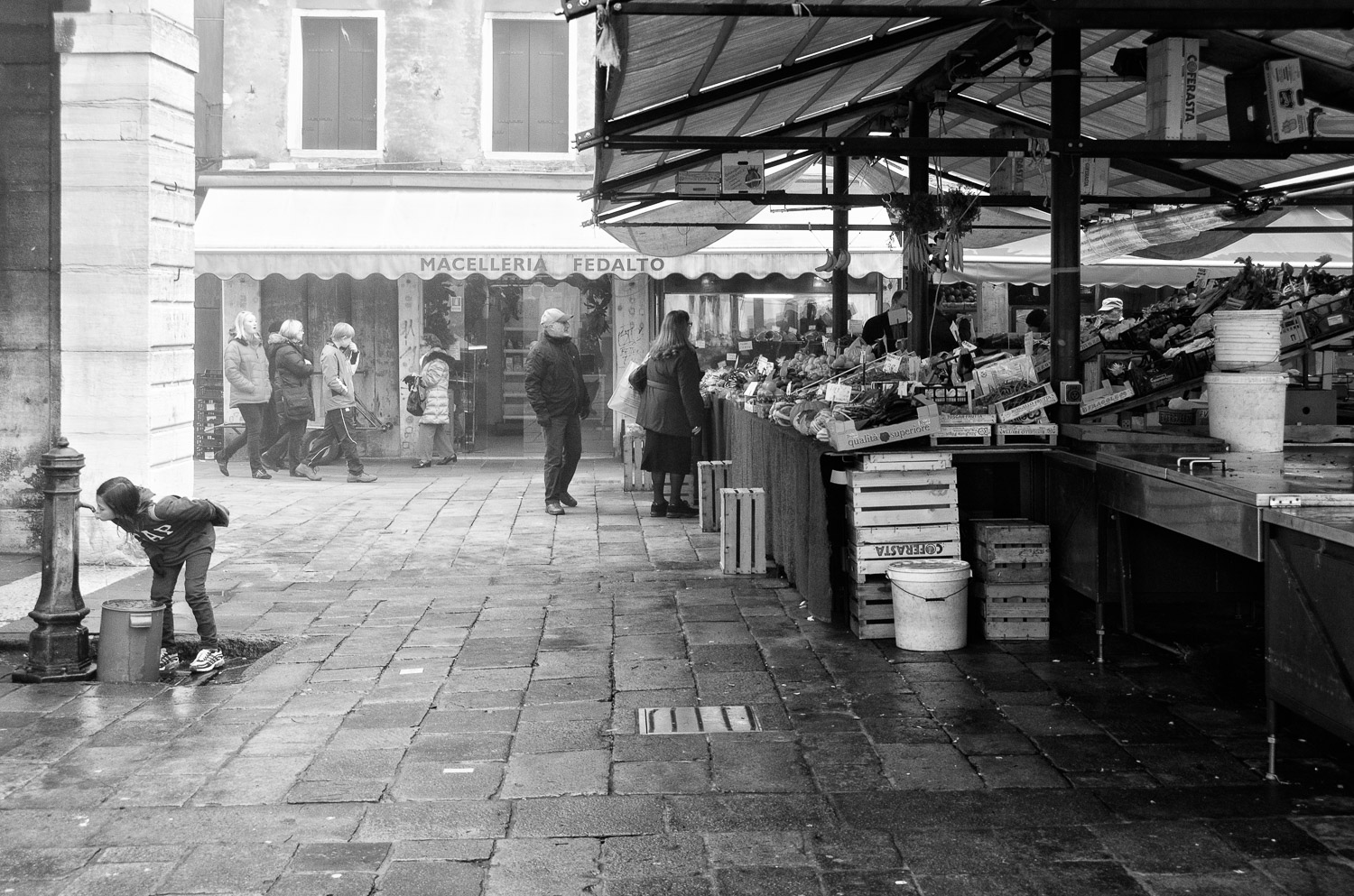
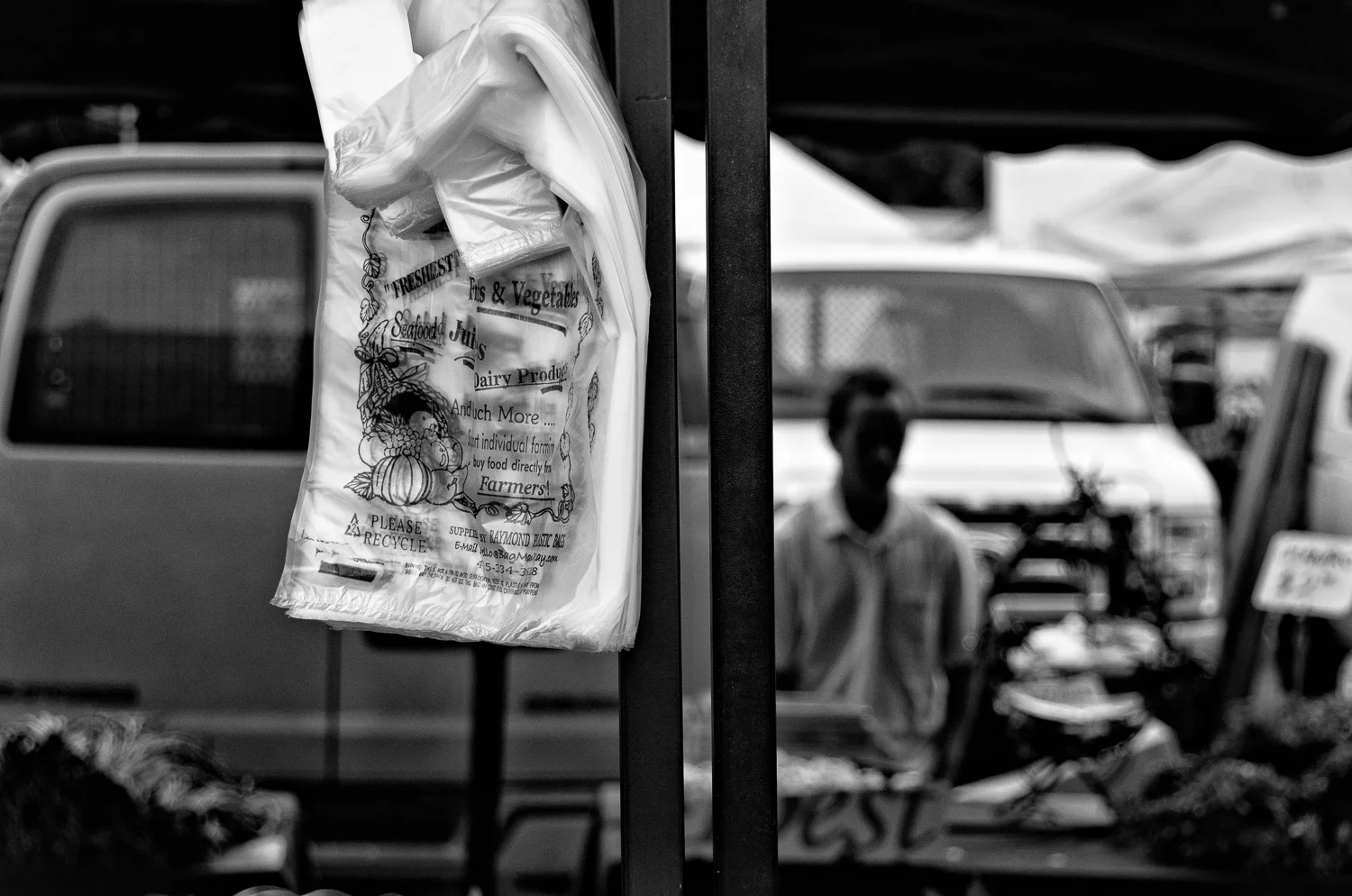
A man sold a bunch of parsley to a robust woman. The woman laughed and talked as she gave him the two dollars that the hand-painted said she owed. She continued her conversation with him while she walked away, getting getting louder and louder in order for him to hear her. Soon she was out of shouting distance and disappeared. Then it was quiet. A brief lull filled the air. The vegetable stand was deserted for a moment but the peace wouldn’t last. The next rush of hungry buyers were but a moment away.
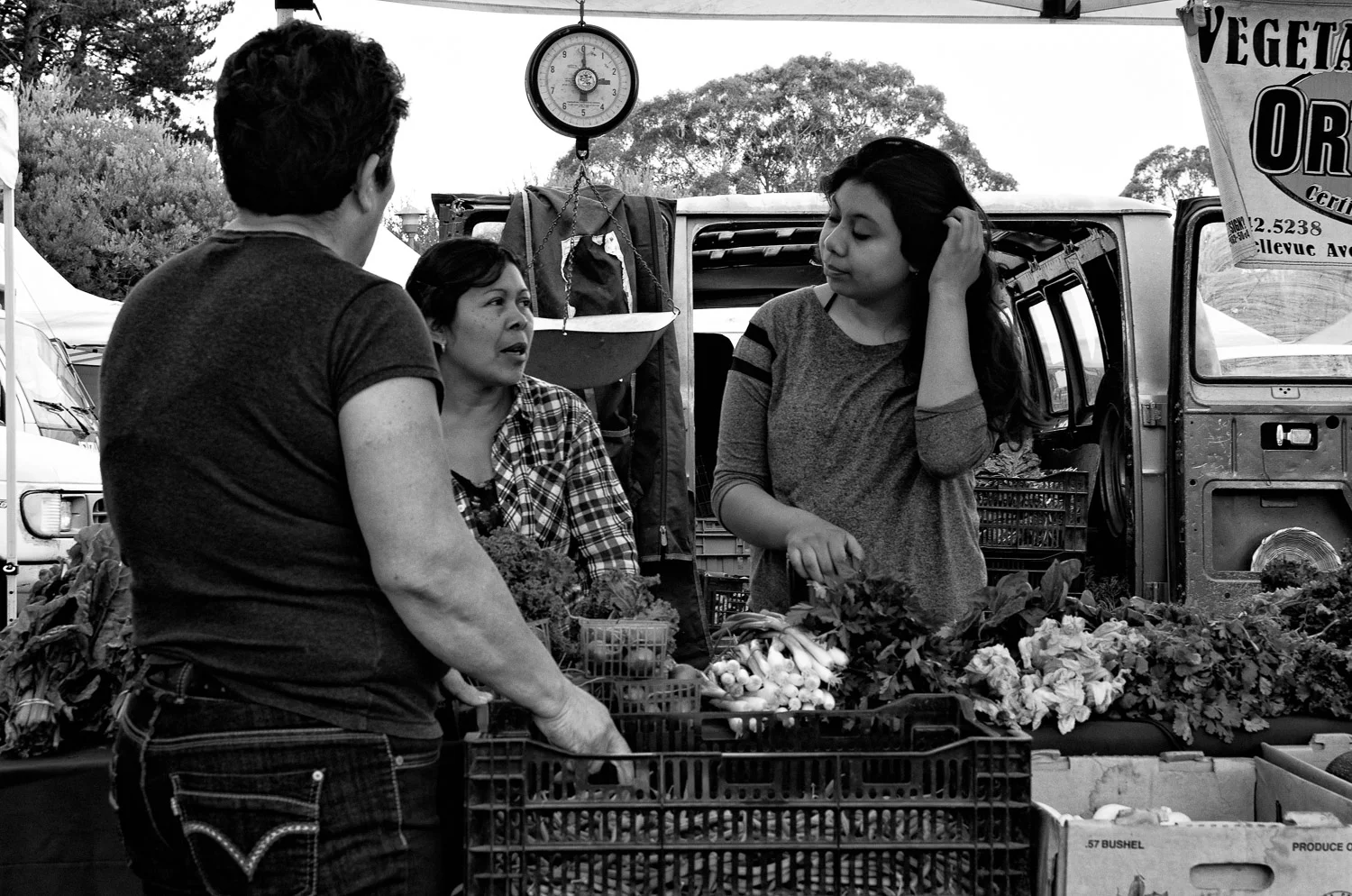
A glance. A shrug. A girl pulls at her hair. Lost in themselves they ignore the bustle of the market around them. They ignore me, too. They face each other, looking inward towards the conversation that envelopes them. I listen to the cadence, the tones of their voices as they rise and fall.
A return from a trip always reveals new things about home. The imperceptible cadence of life seems to have moved at a fast-forward pace upon our return. This is especially true if one has traveled at the change of a season. Autumn seems to have progressed more quickly when we return to a yard full of leaves and bare trees. Does life move this fast when we watch each leaf fall from a tree?
Labor Day Weekend evokes long-ago memories. When I was a kid I never cared for holiday (with apologies to my labor-union friends). It was the Back to School jingles on the radio that ruined things. The adult world was clearly taunting me, delighted to see me return to the grindstone. The days were shorter. The new school year was arriving. The summer was gone.
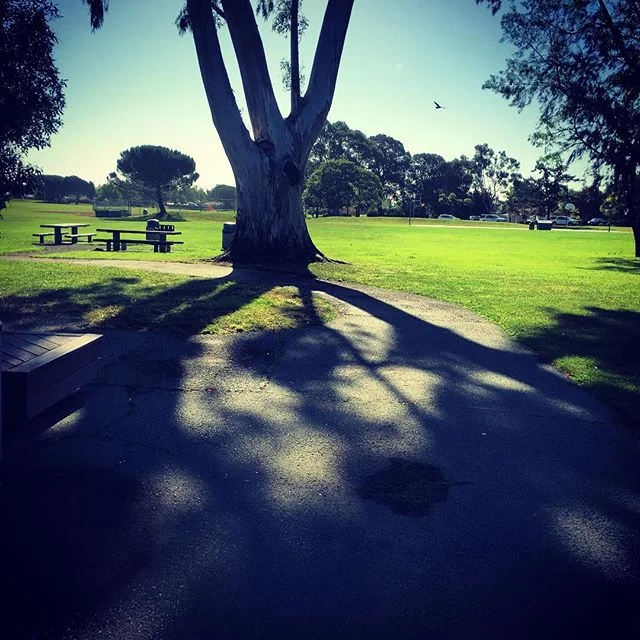
Lately I've taken to walking at sunset. This recent habit started on the night that my mother-in-law died. Alone with my memories and sadness, the house and its four walls were closing in on me. Dusk, with its wondrous light, was right outside the door. It lured me out and then I walked. I've been walking at sunset ever since.
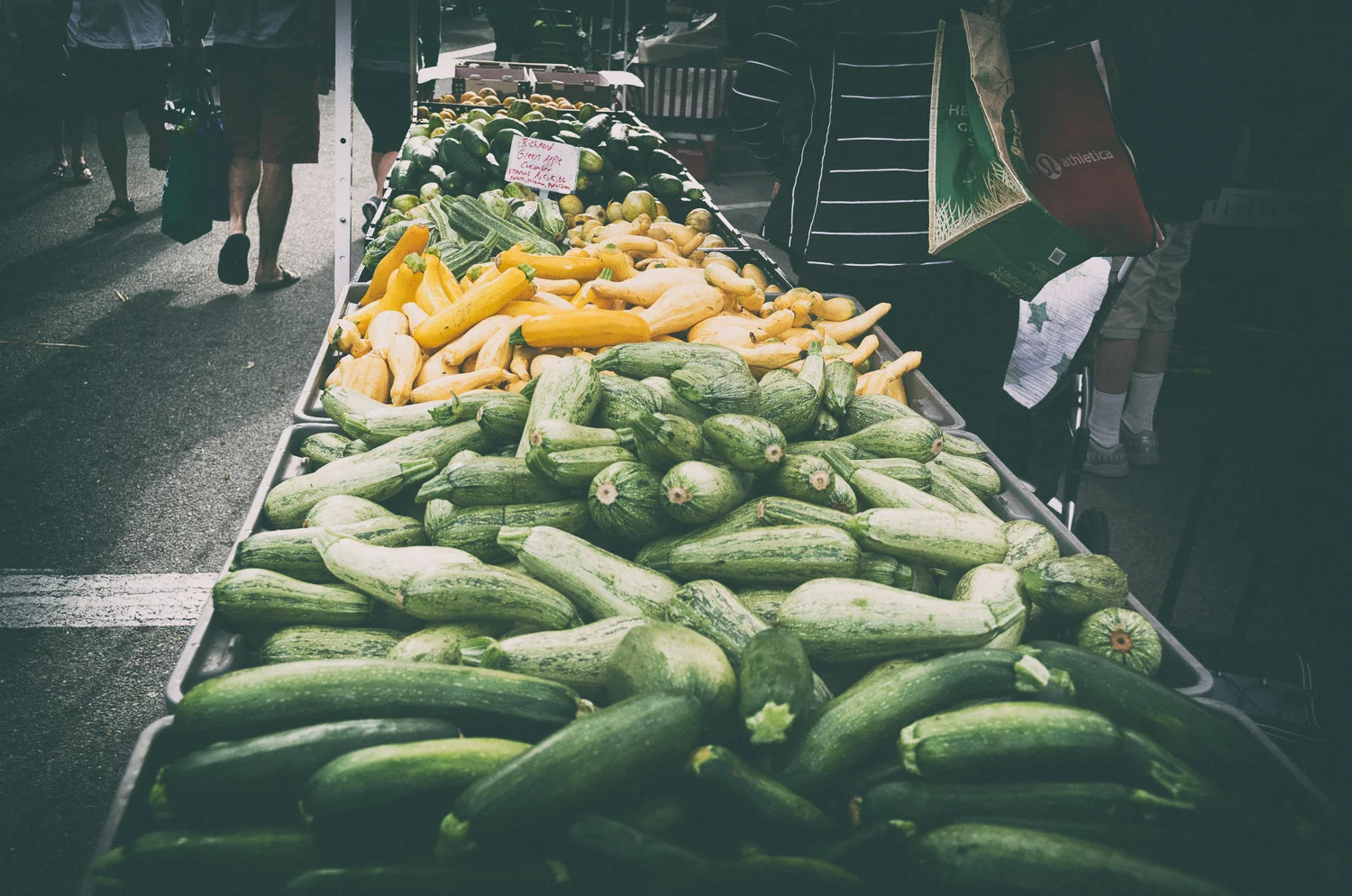
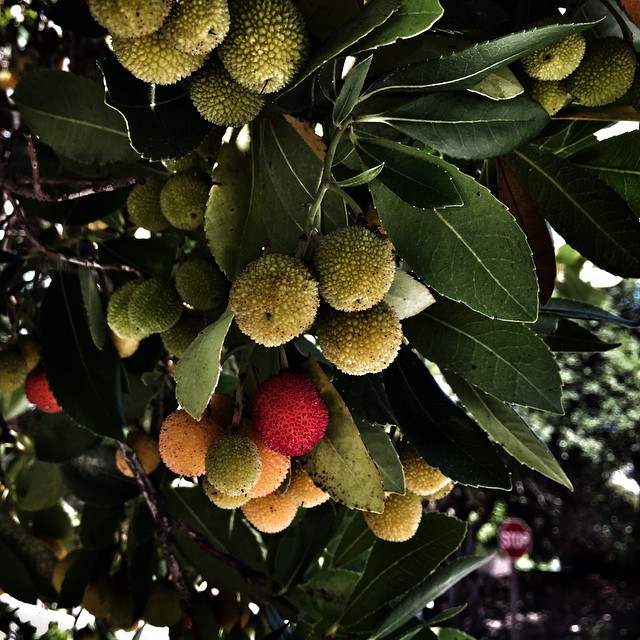
The squash plant in our backyard is a real producer. According to my count, it must grow some thirty squashes during its short season of life. Plump, firm, colorful, and delicious, the vegetables serve to nourish us throughout the summer.
I try not to visit the farmer's market on an empty stomach. The overstimulation of so much fresh, ripe food causes me to buy too much stuff. I lug it all home, as happy as a pig in pile of corn—all self-satisfied and content. But, by the miracle of time, alchemy and a big fridge, too much of the bright and colorful produce transforms into a khaki-colored sludge. This may be good for the compost pile but, at today's prices for organic produce, the green in my wallet disappears faster than the green in my refrigerator.
Everything stops cold in summer. The flow of life seems to lazily drift to a halt, like a boat that runs out of gas. I find it frustrating. It takes twice the effort to get anything done in this season because we push against an invisible force of resistance. Except for the Jersey Shore I've always felt that summer is way overrated. Once it begins I start to count the days until golden light of autumn.
"Don't try to fight it. Just settle into the saddle and let the mule take care of things."
The mule guide was trying to calm a pale, nervous companion who was obviously on her first mule ride and on her first journey out of Grand Canyon. It was just the two of them on the South Kaibab Trail. The guide was a rugged young woman with long, blonde hair, topped with a cream-colored Stetson hat. Fit and trim, her face showed slight signs of damage from the canyon's sun. This only added to her allure. She was strong and straight in the saddle and rode with confidence. Her voice had hints of the Southwestern twang that matched her hat.
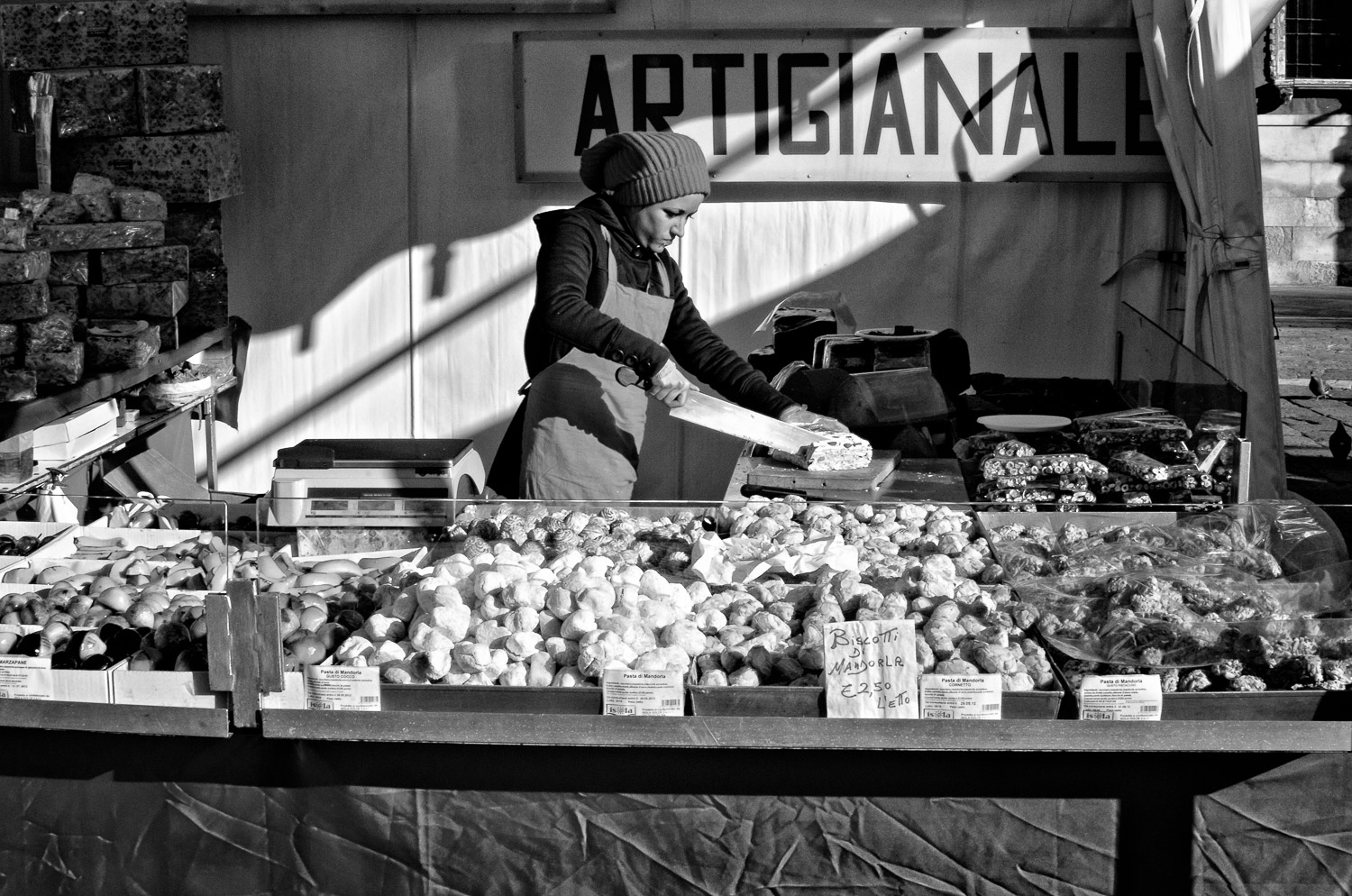
The market has always been a source of photographic inspiration to me. Life swirls around me as I poke my camera into produce, flowers and food stands. Every so often an ordinary moment of human behavior and interaction stands out as something significant. Why does ordinary life seem so extraordinary in the two-dimensional world of still photography? I suppose this is the great mystery of photography and why it compels so many of us to look at our world through the lens.
Sometimes the camera makes me feel like a boy in a bubble. The lens separates me from what’s going on in front of it. My life seems suspended as I float along a sidewalk or path. It’s as if I were a Martian visiting the planet for the first time—a hovering alien, looking at the world the way a curious cat might study a bug. The camera does this to me.
Cherries and asparagus always meet at a certain time in spring and a particular market in San Rafael, California. As if in a May-December romance, the asparagus is on the way out while the cherries are on the way in. They sit adjacent to one another among a sea of produce stands. Their rendezvous is but a short one and lasts only a week or two. The the asparagus quickly disappears along with the people who sell it. The cherries are left to fend for themselves but their season isn't a long one. Soon they make way for the stalwarts of summer: tomatoes, eggplant, basil, and sweet corn.
If I had no calendar I’d gauge my seasons by the rising sun. It seems to be better way to do things anyway. Humans are always screwing around with calendars and time and making a mess of them. Twice per year we think we’re very clever to move our clocks back or forth in the interest of “saving” daylight. It’s a ridiculous notion that does nothing but make everyone cranky on the two Sunday mornings after this feeble attempt of sorcery. Calendars and clocks cause a lot of anxiety in this world. We’d all be better off just paying attention to the sun.
An old woman pointed at the tiny fish, making a point of not smiling at all. The fishmonger picked up on the seriousness of the situation and stood up straight. Venetian women at the Rialto Market are not to be taken lightly and this particular one knew what she wanted.
Morning walks on the boardwalks of the Jersey Shore—something I experienced often in my youth—were always weird. The amusements and food concessions were meant to be experienced at night, or at the very least at dusk. Mornings on the boardwalk were akin to waking up on the on the living room couch on the morning after a party. Stale odors and bits of refuse mixed with the ambience of the misty, salt air. The rising sun revealed stragglers who seemed just a little lost. The fun was over. Morning’s clarity brought new light to the hangover of too much fun and spent adrenaline. Yes, morning walks on the New Jersey’s boardwalks were strange—but I loved them anyway.
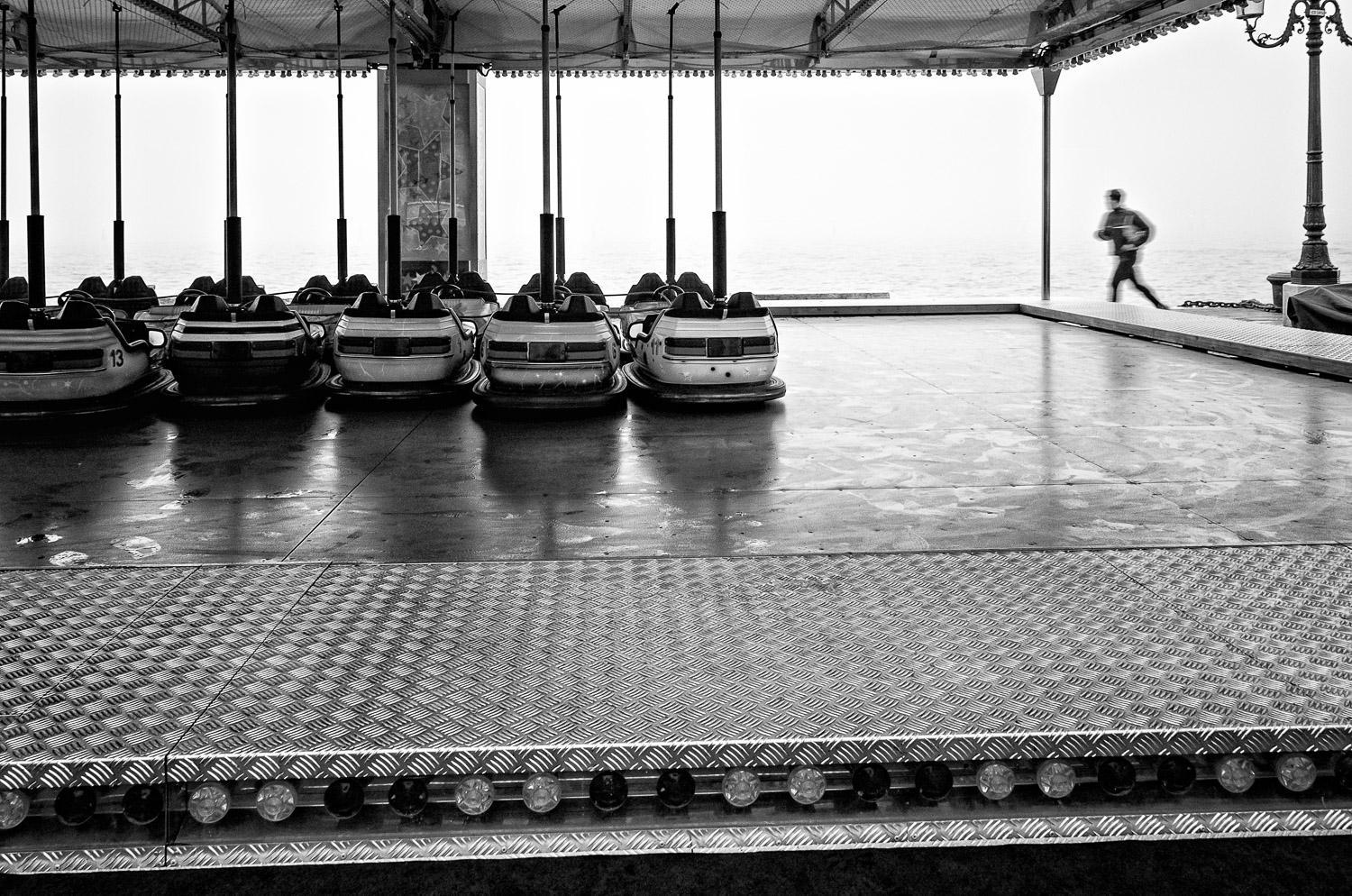
The fog of the Veneto had smothered the entire Venetian Lagoon with a cottony wall of cold vapor. There was nothing to see on this vaporetto ride out to the Lido—nothing outside the windows that is. Inside the cramped boat’s cabin, I stared at the back of a fellow passenger. He, in turn, was staring at the back of the person in front of him. And on it went from back to front of the boat. Like several hundred anchovies in a tin can—the salted kind from Sicily—we were jammed into the steel confines of this listing vessel. It seemed like a one-way trip to Purgatory.
Wild animals come into our lives for only brief moments. One must be deft at beholding them. A photographer must also be quiet and at the ready. Fiddling around with cameras and settings can mean lost opportunity. The whirring of autofocus and the thunderous thud of an SLR shutter can scare off humans in the wild, let alone other warm-blooded creatures
When I was a very young boy all the gas stations in our town had colorful, little propellors strung between posts. Designed to attract customers, the propellors would spin in the breeze and make an odd, fluttering sound that I still remember well. I’d look out the window of the back seat of our station wagon and watch the propellors in marvel. I’d roll down the window so that I could hear their sound. I’d get down low as to get a good view of the propellors in the sky. I wondered if they might take off at any moment, carrying the gas stations with them.
Sunday’s farmers market during the summer is always packed. It’s that way in the summer. No one can resist the fresh corn or the plump, red tomatoes. And the peach guy has about twenty samples on which some people gorge for about twenty minutes. They look like overgrown chipmunks, cheeks full of peach slices and the juice dripping off their chins. The long days attract mothers and their strollers and fathers and their sons. Mixed among the seasonal hoards are the regulars who I see week in and week out, even in the lean months of January when broccoli seems to be the only star of the market.
“I need to photograph more,” I said to myself on a crisp, spring day. I was in one of those artist’s slumps where I felt the desire to make something but not quite having the energy to lift myself from my chair. Instead I rocked myself into further justification for doing nothing. I looked out my window knowing that I was wasting a perfectly good day.
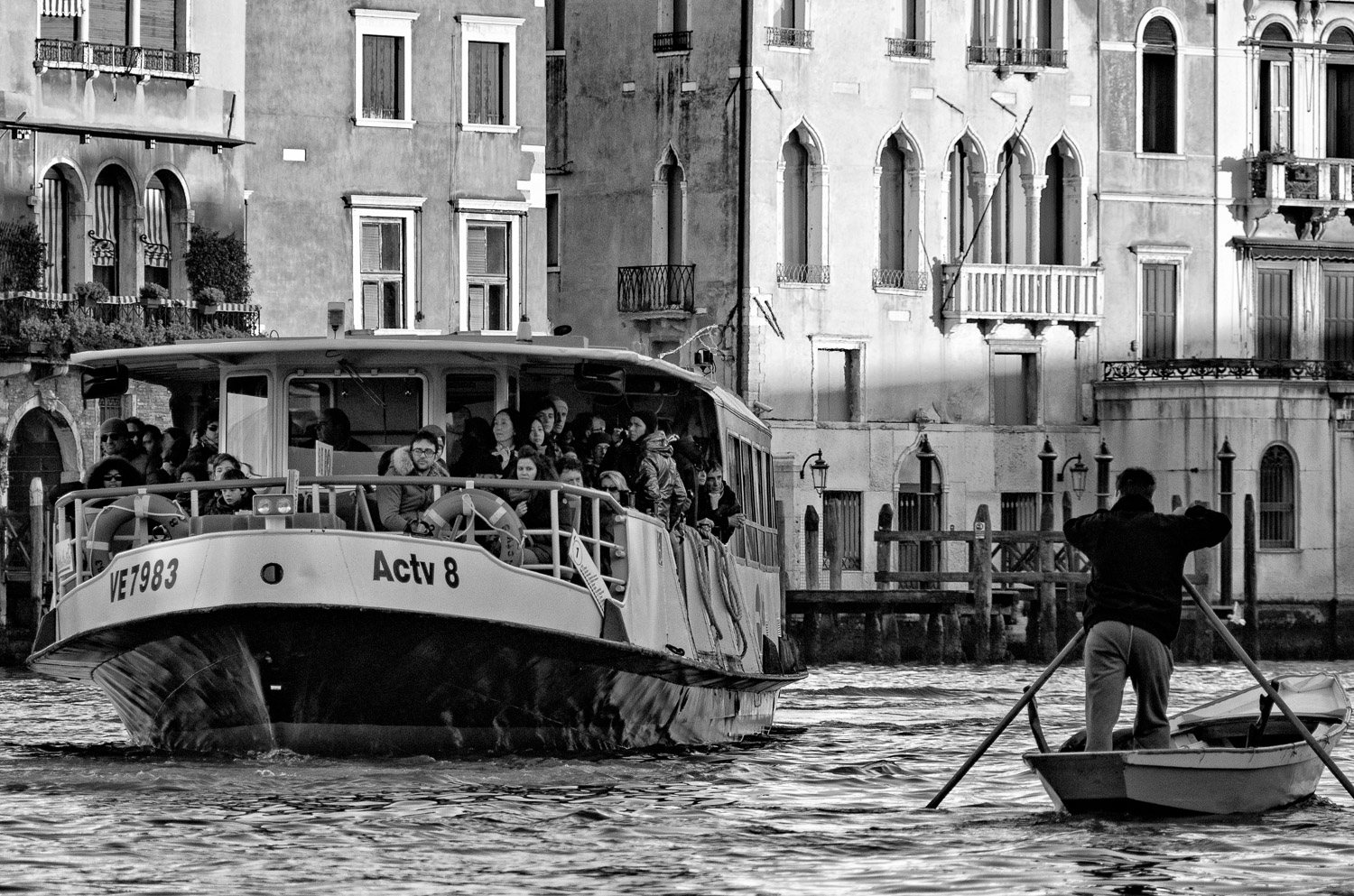
My dad was a people watcher. He could sit in a public place all day long and watch the world as it passed by him. I grew up in New Jersey—the outer suburbs of New York. An area ruled by autos, it was rare for us to take public transportation anywhere. But, when we did take the bus, the train, or the ferry, my dad would invent stories about the people on them. I suspect that we all play this game whether consciously or not. We label people and assume certain aspects about their lives. The mental stories become more elaborate when we’re forced into the idle observation associated with public transit.
The San Francisco waterfront was still gray from the early-morning summer fog. For the second time in two weeks I’d visited this very spot with my camera. The waterfront seemed different on this day. As I looked deep into the bay, the reflections danced with a darkness that I found compelling. Mostly amorphous, they changed as we came up adjacent to the San Francisco Bay Bridge. These long, linear reflections made me stop in my tracks. The bridge has become familiar after ten thousand visits to this waterfront, seaming nothing like it did the first time I laid eyes on it some thirty years ago. Back then the sight of the bridge made me gasp, now it brought a faint smile and a deep breath of gratitude.
Along San Francisco’s Embarcadero is an old food joint called Red’s Java House. It’s been there forever. Back in my youth I could get a double hotdog there for about a buck. So, I went there a lot. I’d walk from my South-of-Market office down to the waterfront for my hotdog—a long way for a lunch break. The double dog is now almost $6.00 but it’s been about thirty years since I first found the place. But, less than six bucks for a double dog wrapped in a sourdough roll still seems like a good deal to me.
Phantom Ranch, Grand Canyon
Mark Lindsay has been in imaging since he was 14 years old when his parents bought him his first SLR camera. Shortly thereafter he set up a darkroom in his bedroom and has been making photographs ever since. He attended Rochester Institute of Technology where he earned his BS in Professional Photography in 1978. He continued on at RIT to complete the coursework for his MS degree in Printing Technology.
After leaving RIT, Mark joined Azoplate Division of American Hoechst Corporation where he developed and tested lithographic plates for the graphic arts industry and installed large platemaking systems at newspaper publishing operations.
In 1980 he moved to San Francisco and was employed for fifteen years at George Lithograph Company as a sales representative, customer service manager, sales manager, and eventually vice president of sales and marketing. He then spent two years as general manager at Lithocraft, Inc., a high-end sheetfed lithographer located in Santa Rosa.
For the next seven years Mark, as president of Lindsay & Associates, was a graphic arts industry consultant, specializing in digital-imaging workflows, sales and marketing, and strategic planning. At the same time he taught cooking classes at Tavola Festiva, his cooking school in Corte Madera, which specialized in authentic Italian cuisine.
In 2002 he left the printing industry and returned to graduate school where he completed his MFA in Studio Arts at John F. Kennedy University. His final show, Desolation‘s Comfort: Photographic Re-collections was held in October, 2007. The show received rave critical reviews. It later showed for three months at ColorGraphics in San Francisco. Mark is a painter in watercolor and acrylic, and a photographer, specializing in photomontage.
Mark has taught painting, digital photography, and Photoshop for photographers. He also taught bookmaking to artists at College of Marin. He is currently working in Silicon Valley as an instructional designer for photography software applications. He lives in Corte Madera with his wife, Susie, and their three cats.
Reinhabited lonely landscapes
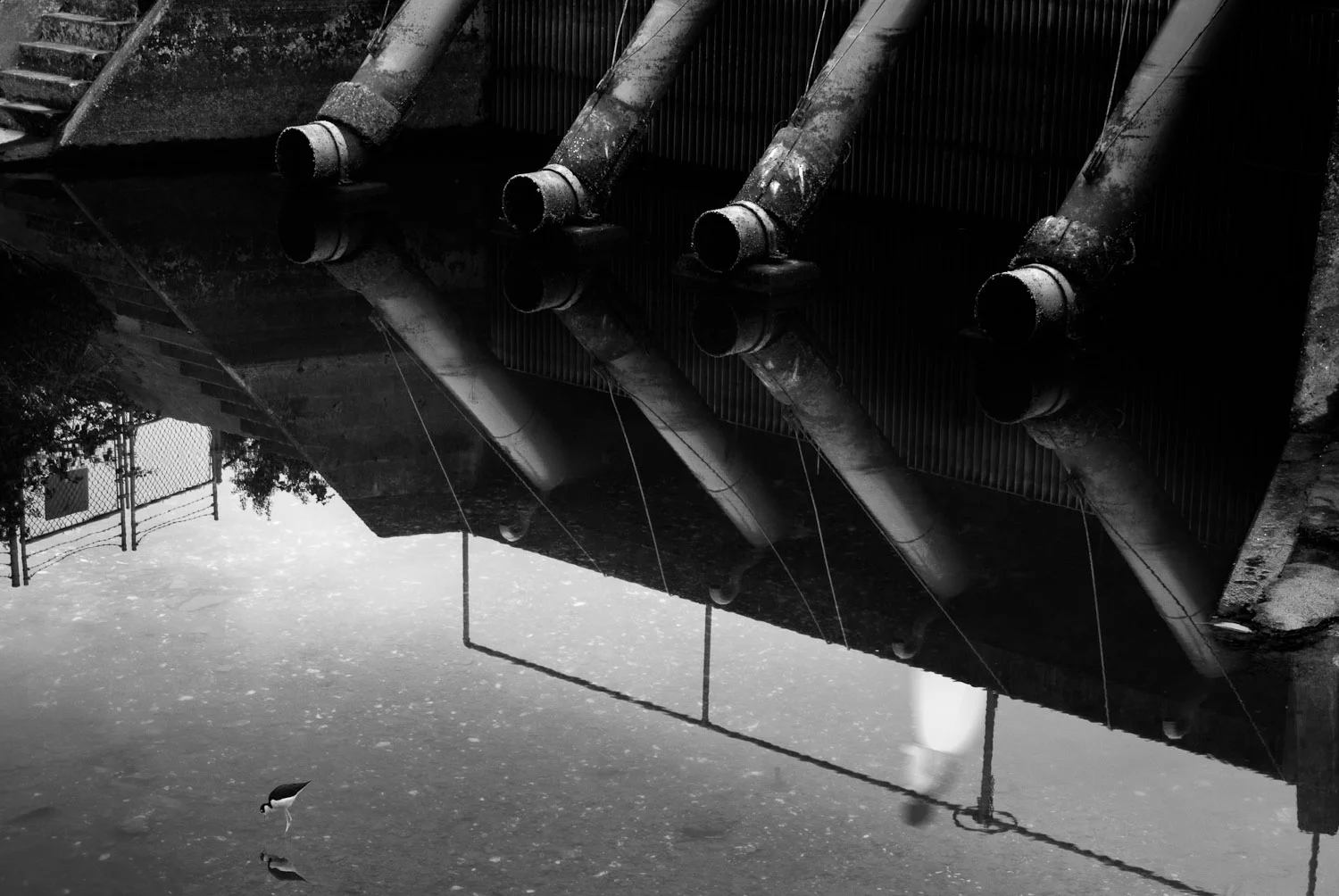
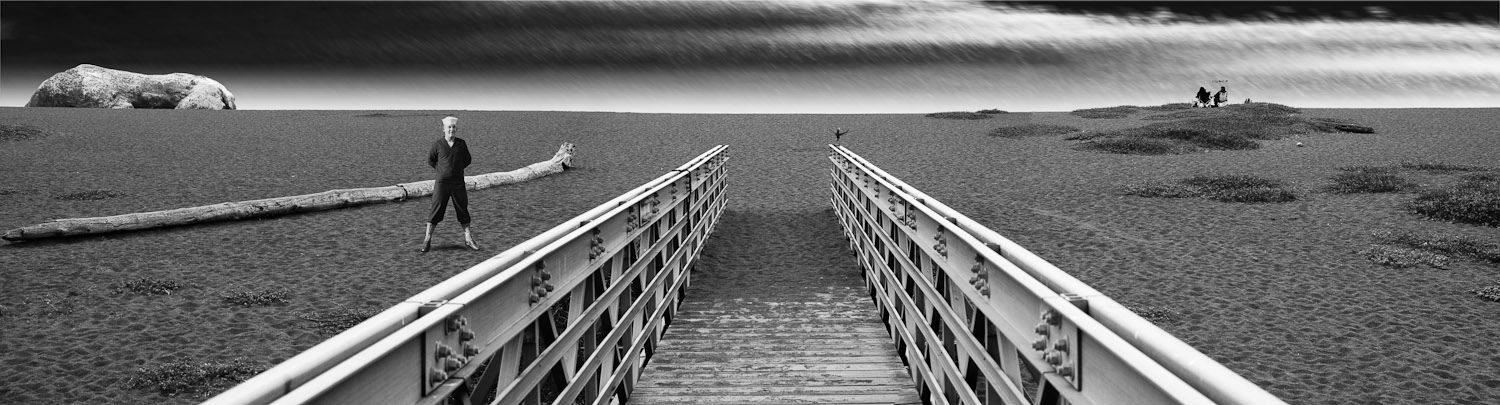
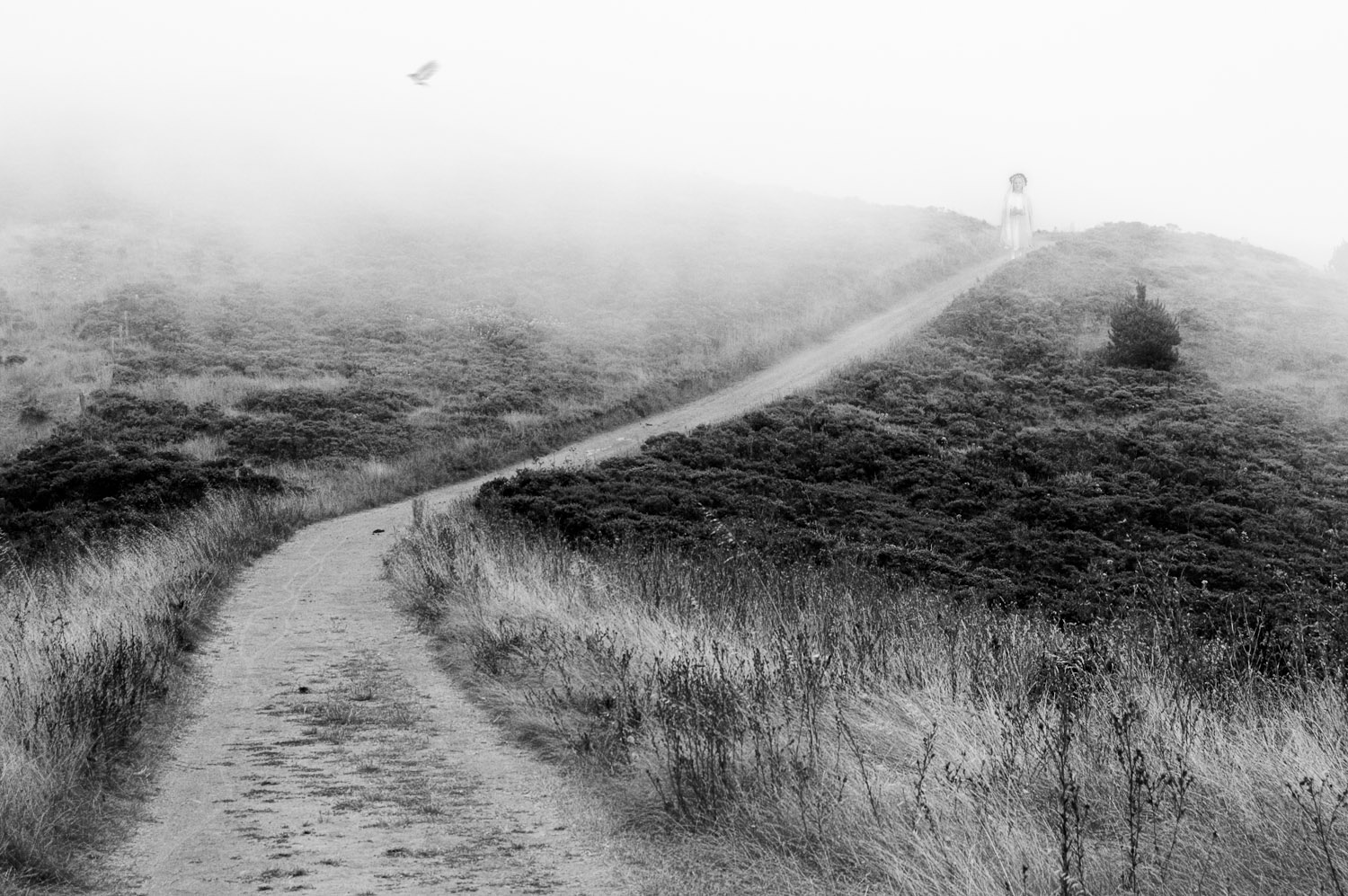
This work is my response to the lonely landscape. Whether one defines landscape literally as land, sea, and sky or more expansively as both inner and outer worlds matters not. It is a vacuum that, for some reason, I need to fill. When I started this process several years ago, I felt that it was the lost characters from old photographs that needed grounding and placement in my world's landscapes. Now I realize that, conversely, it is I who needed them. When I first started this series as part of my M.F.A. graduate show, Desolation's Comfort: Photographic Re-collections, the landscapes were pastoral and pristine. Now the work is moving towards darker places; old bunkers, fortifications, and areas of industrial ruin.
Like the shadows of the psyche, these forgotten venues represent the things we'd prefer to ignore or forget. Yet, they are there, places as lonely as any other. The characters that populate my landscapes are enigmas. Mostly, they come to us from times past, their earthly presence now only ghostly images on forgotten and tattered photographs. Many I knew personally as a small boy, some were known only from oral histories told to me by elders. Others remain a complete and utter mystery.
I now present them to you so that you might find something of yourself in these images. Your interpretation and response is a vital part of the swirling magic of life and death and rebirth again. Your imagination is just what I need to make this project complete.
Prints from this series are available for purchase in limeted editions.
Desolation’s Comfort at JFKU Arts & Consciousness Gallery
“True straightness seems crooked. True wisdom seems foolish. True art seems artless. The Master allows things to happen.”
Photography portfolios
The artichoke is an unfriendly thing. The whole purpose of its design is to keep you away from it. If you try to cut it or rip into it, it bites back with a sting. Most Americans don’t eat many artichokes. I suspect that its ominous nature is the reason why.