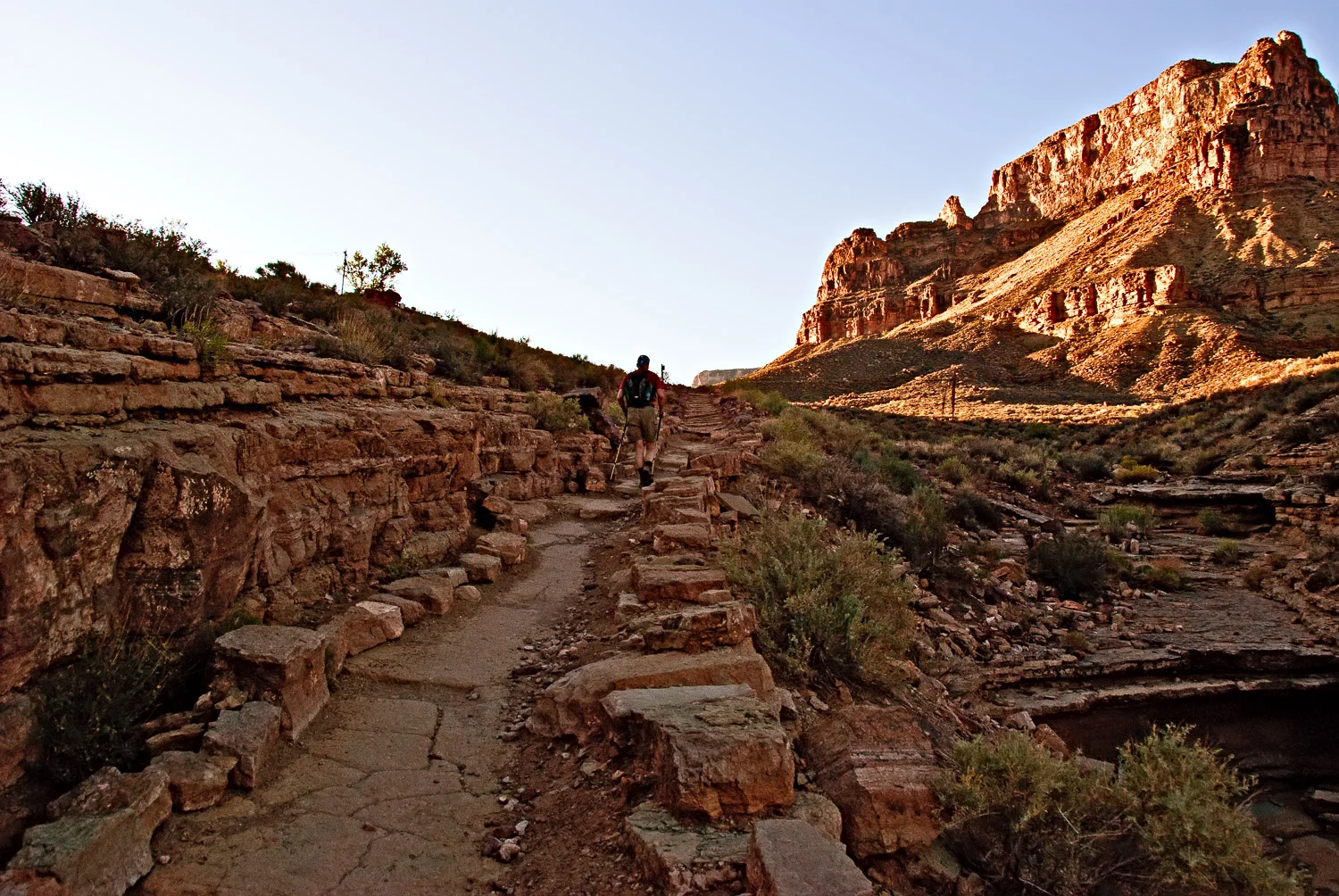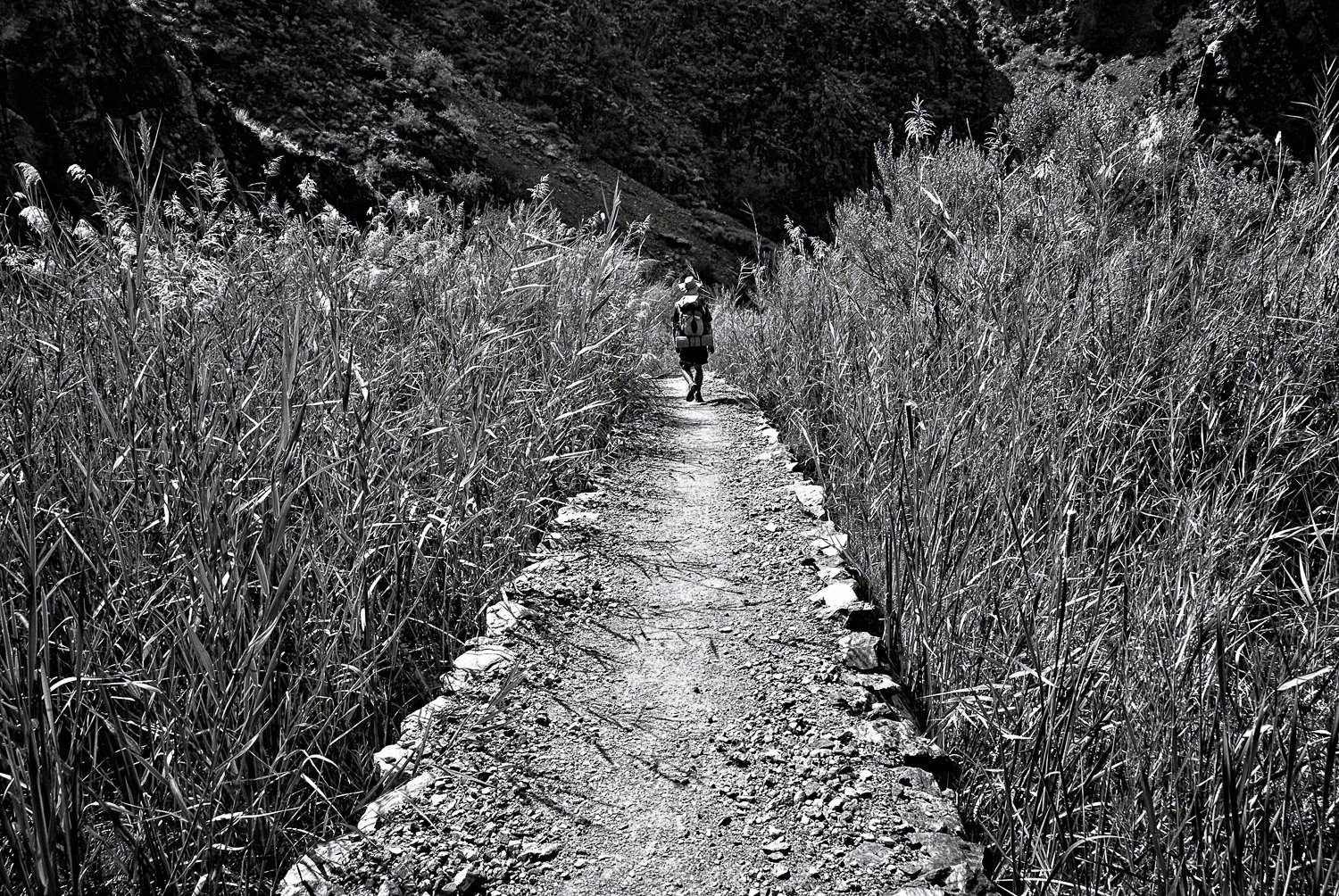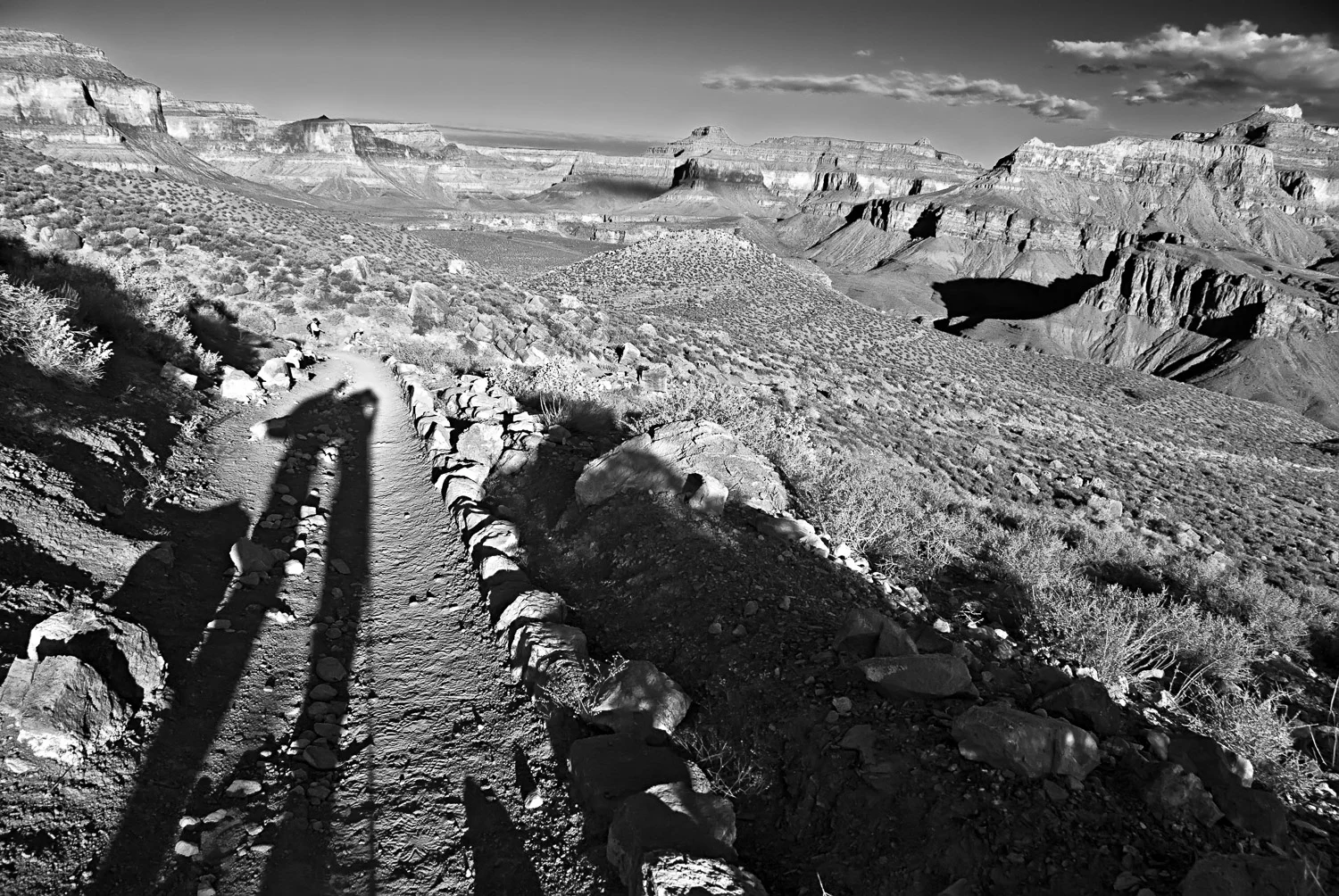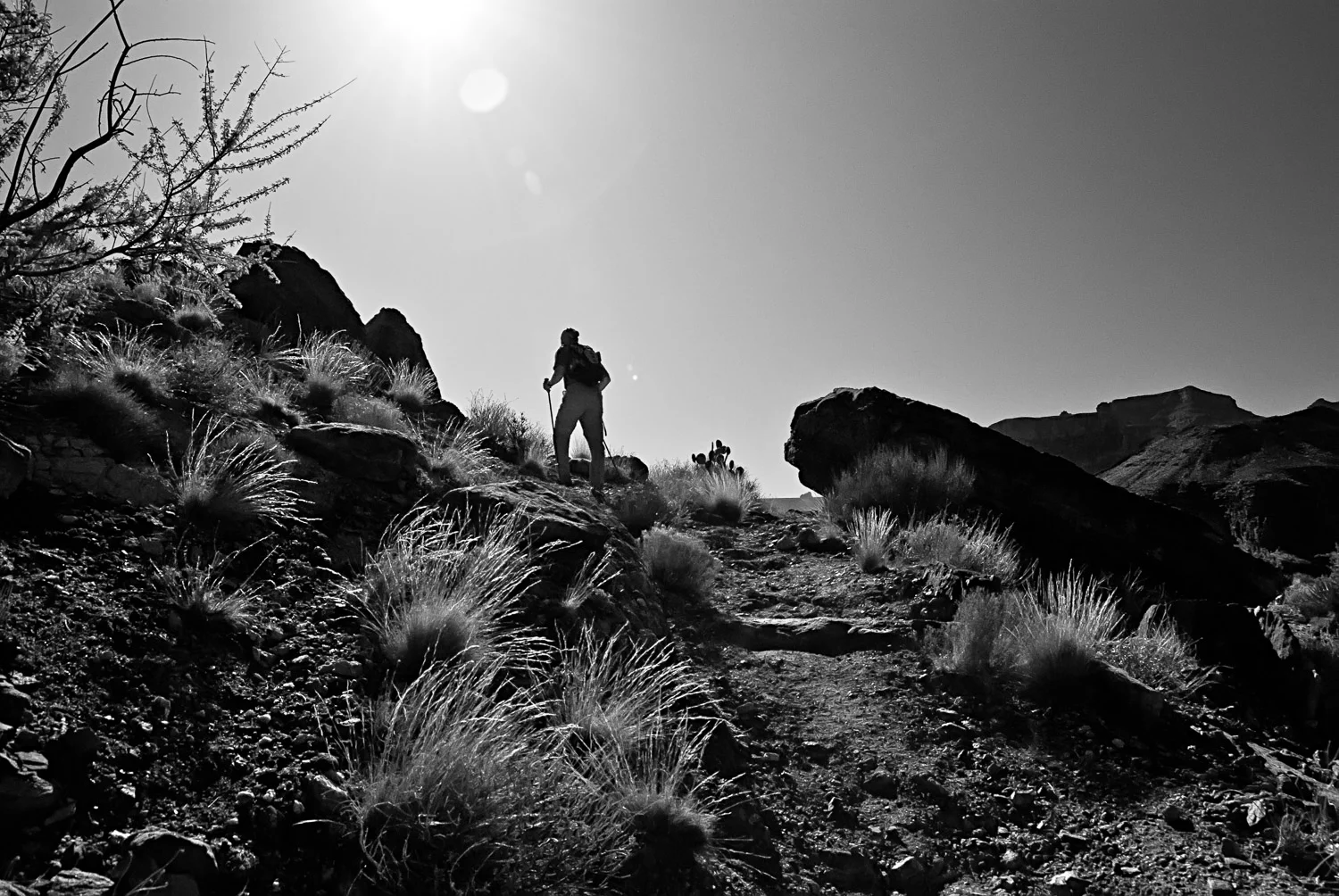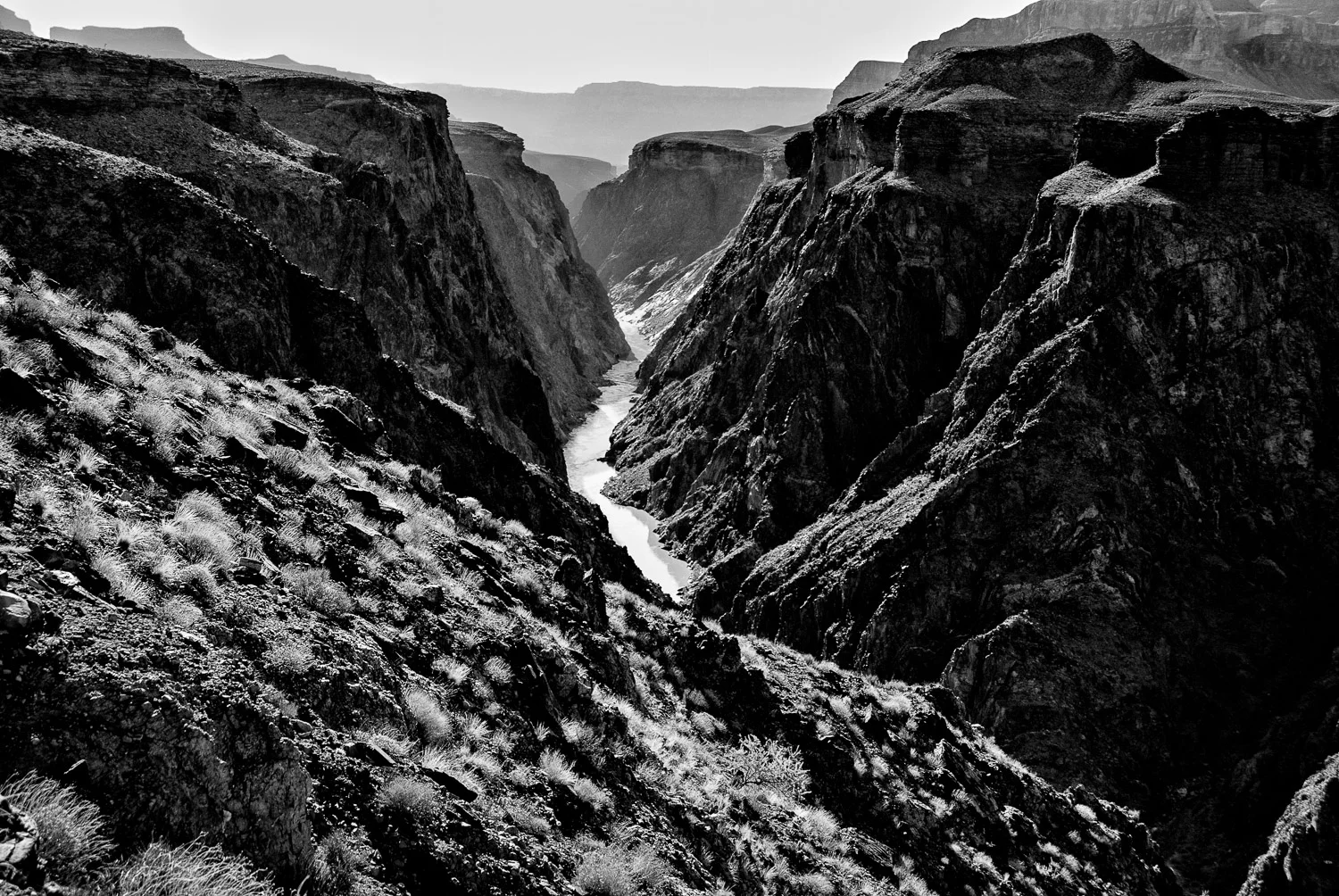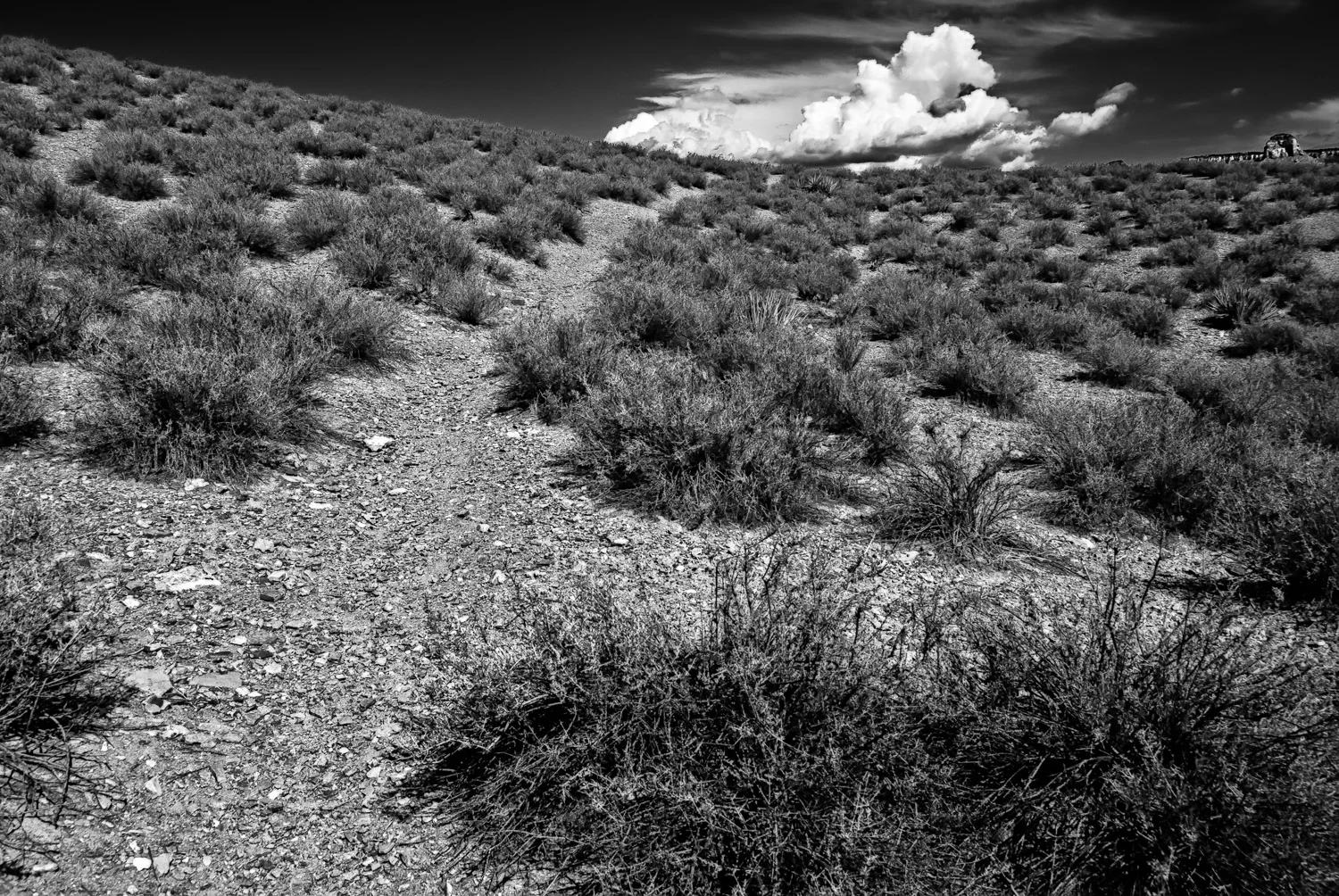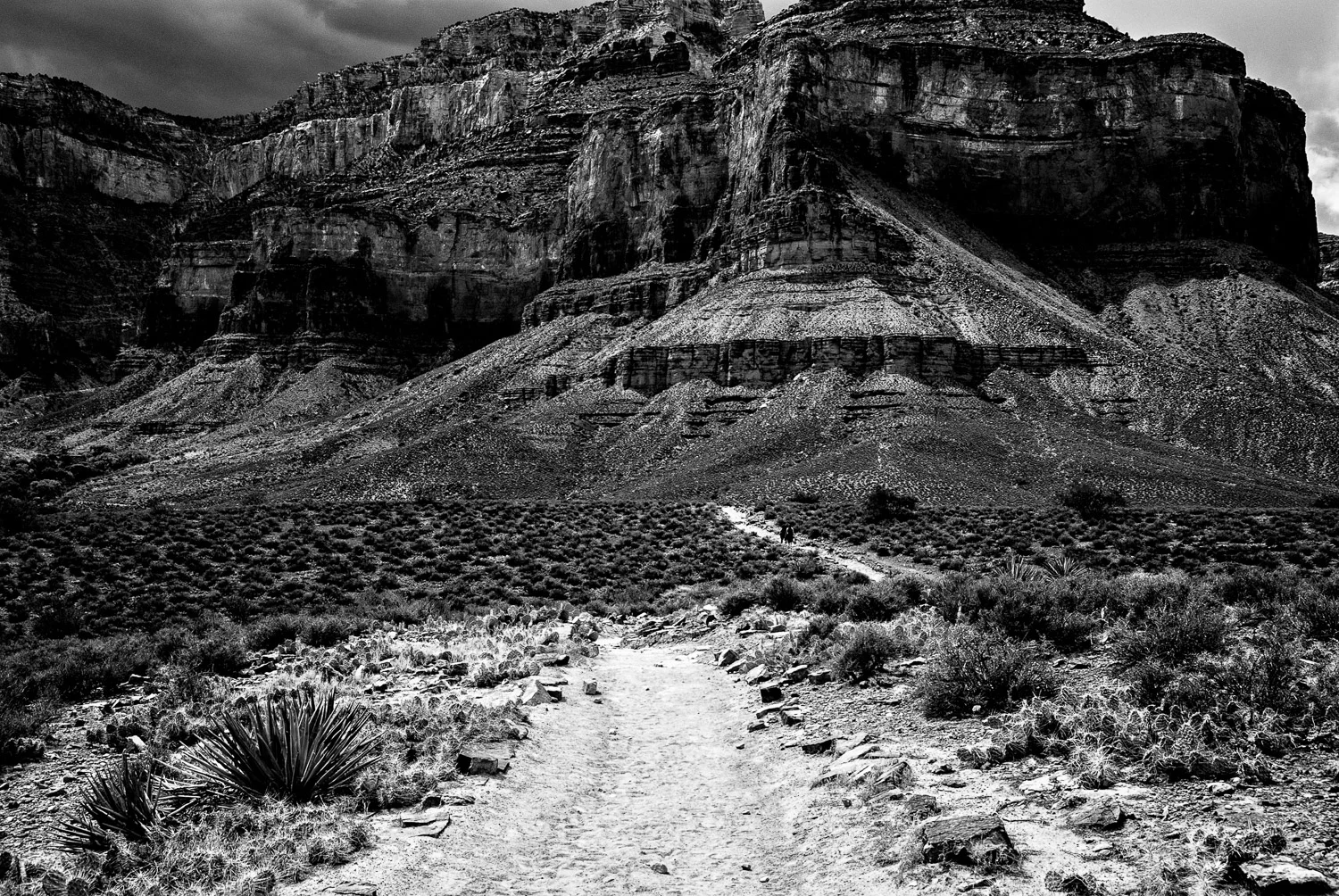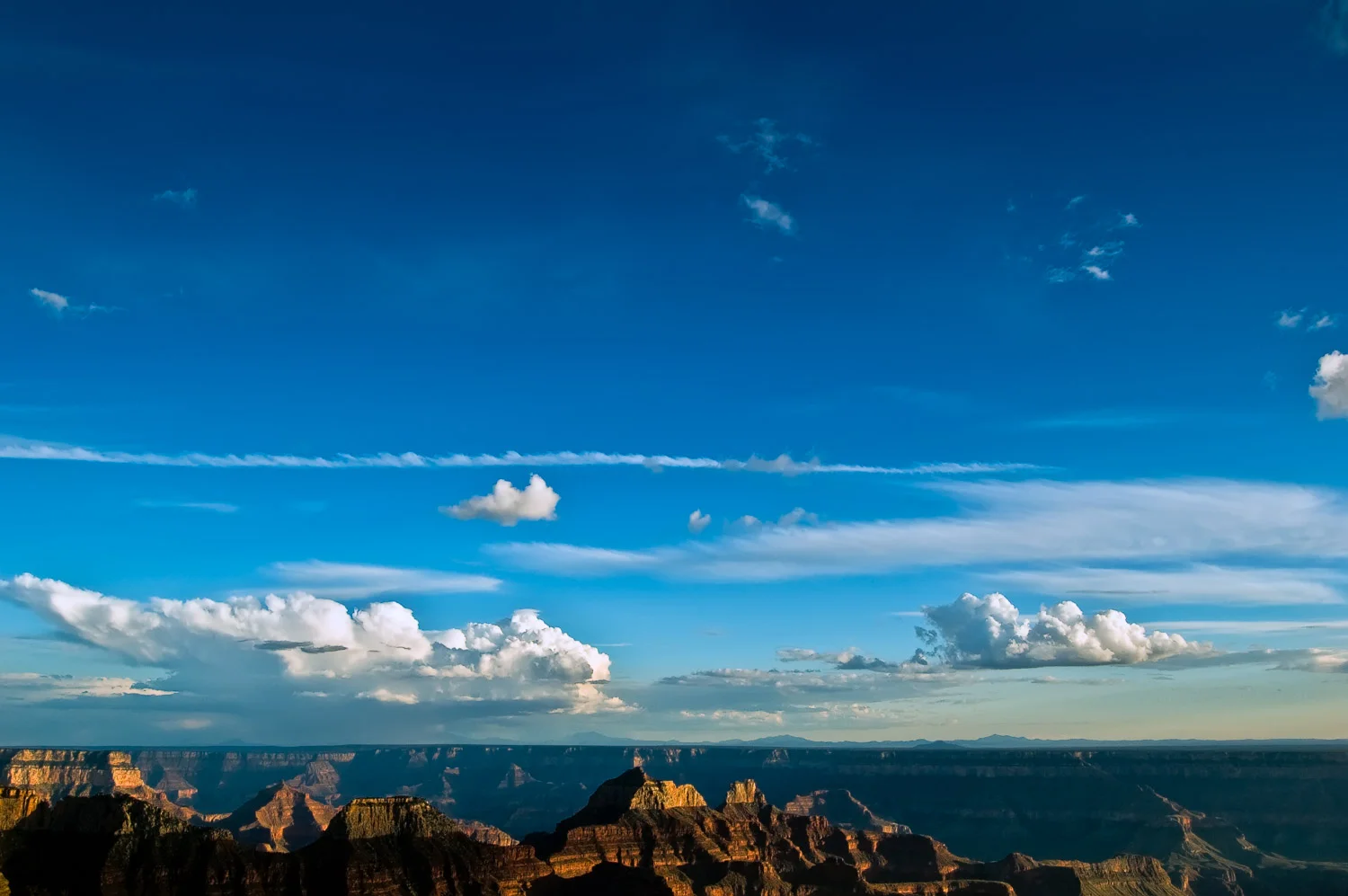
There are more facets to Grand Canyon than lifetimes could uncover. As a photographer, the stimulation to capture the essence of everything, everywhere in the canyon is overwhelming and often exhausting. Returning to the canyon every year for an ambitious hike to the canyon floor and Colorado River, I see more with every step. Even the same places I have visited before are forever different, changing with light and the temperment of the weather.
The project to photograph Grand Canyon is never-ending. Hiking the canyon every year with two hometown friends has yielded ane ever-growing treasure trove of photographs. I already have many thousands of images to sort through, edit, re-edit, interpret, and re-interpret. Sometimes quiet gems get lost in the database, tucked amonst brighter amd more assertive photos. Like the sunlight that alters the vibrations of the canyon with every moment, the image collection seems different to me most every day. Please come back often as the gallery will grow and evolve with time.
“You cannot see the grand canyon in one view, as if it were a changeless spectacle from which a curtain might be lifted, but to see it you have to toil from month to month through its labyrinths.”
Related Writings
The balmy air at the North Rim was speaking to me. I should have been listening. Late September in these rarefied parts is normally brisk, sometimes even cold. On this day of our arrival we were comfortable in short sleeves. If it were warm here, the inner furnace of the canyon would be even hotter than normal. But the Nankoweap Trail was already playing with my head. I'd heard and read so much about its steepness, ruggedness, and dizzying heights I didn't even bother to think of its exposure to heat and sun. But in the end it's the heat that always matters in Grand Canyon. Always.
"Don't try to fight it. Just settle into the saddle and let the mule take care of things."
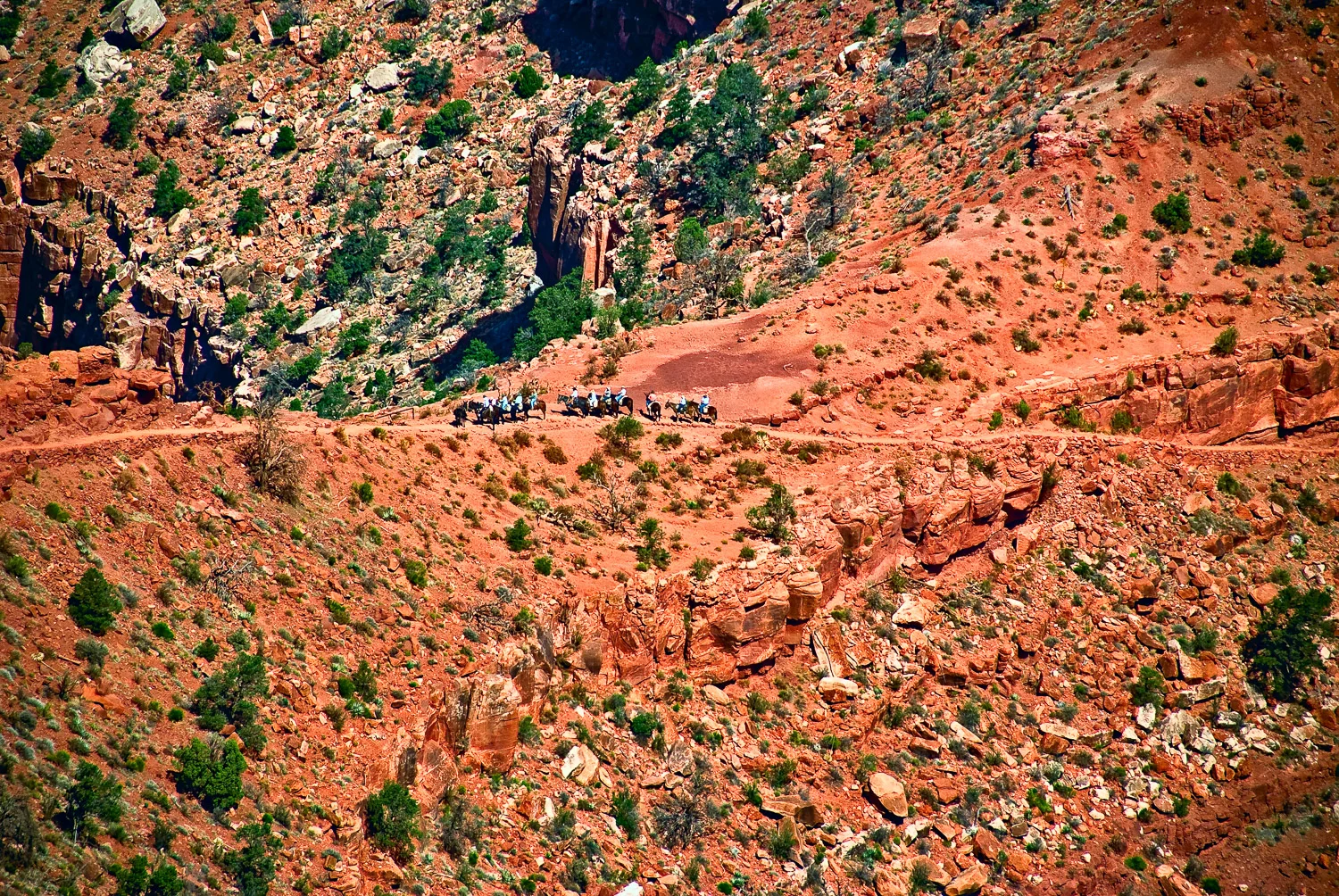
The mule guide was trying to calm a pale, nervous companion who was obviously on her first mule ride and on her first journey out of Grand Canyon. It was just the two of them on the South Kaibab Trail. The guide was a rugged young woman with long, blonde hair, topped with a cream-colored Stetson hat. Fit and trim, her face showed slight signs of damage from the canyon's sun. This only added to her allure. She was strong and straight in the saddle and rode with confidence. Her voice had hints of the Southwestern twang that matched her hat.
The Grand Canyon is the most unforgiving of place to be a photographer. One could interpret that in myriad ways. I could write about the monsoon downpours that might short-circuit your camera. Or maybe we could discuss the dust, sand or heat that can also make a mess of your most expensive equipment. Then there are the ledges, cactus and rattlesnakes that seem to be around whenever you are concentrating on what's in the viewfinder. The above-mentioned are critical. Beware of all of them. But, the thing that will *really* ruin your photos (other than a plunge off the canyon's edge) is the impossible dynamic range of light.
I have never been without my camera at Grand Canyon. Photography is simply the natural thing for me to practice there. I've made so many images of the canyon that I thought it might be appropriate to share some of the photo lessons that I've learned.
You can feel it in the air the day before. There's a undercurrent of apprehension. No one will admit to it, everyone seems a little too cheerful. But, little things give it away.
With lots of time and open space, my imagination expands. The North Kaibab Trail has led me here. I started the morning seeing my frosty breath and now, after descending into the belly of the earth, it's nearly 100 degrees. Ponderosa pines have given way to gnarly little cacti that are nipping at my ankles.
An artist knows how quickly light changes. Landscape painters are keenly aware of shadow movement. Painting outdoors is a humbling experience. Nothing stands still. The universe speeds up and becomes elusive, as if it were aware that someone was trying to capture it.
Gasping for breath on steep inclines, I tend to chatter to myself on the trail—especially when the trek gets tough. Maybe it's the endorphins, the energy drink, an over-baked brain, or simply oxygen deprivation. Anyone who listens gets an earful.
Legs wobbly from the fourteen miles of the previous day, it takes a new mile on this new day to get the rust out of my joints. There's little warmup. We're heading straight up the ancient Vishnu Schist. Almost two billion years old, these rocks are the strangest I've ever known. They vibrate with a kind of heavy energy. Gnarled in black and magenta, the rocks sucked us into them and the release from their pull takes much effort. One is silent in the compressed heat of the inner gorge. It's as if the energy that forged this metamorphic rock were still present, still glowing. The base of an ancient mountain range, these rocks were gashed by the upstart Colorado River in recent times (from a geological perspective). It's almost like they resent the intrusion. They seem grumpy this morning. Or is it just my legs?
There are spots on the Tonto Trail where the path fades to nothing. Experienced guides tell us to follow the path of least resistance, it's where the Tonto always goes. In the constant heat of this rolling plateau—halfway between Grand Canyon rim and Colorado River—the trail morphs into a sentient being. If it were a person, it would be skinny. Very skinny. I find myself talking aloud to the Tonto. Curiously, it talks back.
Deep in Grand Canyon the sudden realization hits us. We smell it. We look up and see it. Rain clouds. Early September means monsoon season—we get a taste of it most every year. A sudden ghost wind confirms it. We swallow hard and wait for thunder.
The clouds grumble at first, like a grumpy lion who's been awakened from his hot-afternoon nap. The ghost wind hits us again, licking us with its cool wetness. The desert sucks the wind dry and stillness returns, but the clouds grow by the minute. Dark, Darker, Black. Stillness always precedes thunder. We wait.
I first visited Grand Canyon as a 14-year-old boy. This blog has chronicled those first impressions, particularly in my post, The Mules' Echos, the story of my dad taking me to the rim before sunrise. From the glimpse until this day I have made, collected, sorted, and edited thousands upon thousands of images. After awhile they just pile up—physically, digitally, and metaphorically—and it's hard to allow them to breathe and find their way into to daylight. How does one choose the best and how do would they hold together as a group?
My father had decided that we'd watch the sunrise over Grand Canyon. It was an ungodly hour for any pimply teenager. It was dark and I'd finally found a comfortable spot in an otherwise lumpy motel bed. I groaned and pulled the covers over my head. The old man was crazy. I wasn't moving.
The first afternoon and early evening on the South Rim was tempestuous. The Arizona skies were heavy and swirling. This is never a good sign in the monsoon season of early September, especially for a hiker about to descend into the enormous gash that is Grand Canyon. When stimulated, monsoon season means a heavy diet of rain, wind, thunder, and lightning. It means clear skies that turn to into an apocalyptic fury that can curdle the blood of the most fearless of campers. One look at the sky upon our arrival and I knew it was going to be an interesting week.